
Get trending papers in your email inbox once a day!
Get trending papers in your email inbox!
Subscribe
InfGen: A Resolution-Agnostic Paradigm for Scalable Image Synthesis
Arbitrary resolution image generation provides a consistent visual experience across devices, having extensive applications for producers and consumers. Current diffusion models increase computational demand quadratically with resolution, causing 4K image generation delays over 100 seconds. To solve this, we explore the second generation upon the latent diffusion models, where the fixed latent generated by diffusion models is regarded as the content representation and we propose to decode arbitrary resolution images with a compact generated latent using a one-step generator. Thus, we present the InfGen, replacing the VAE decoder with the new generator, for generating images at any resolution from a fixed-size latent without retraining the diffusion models, which simplifies the process, reducing computational complexity and can be applied to any model using the same latent space. Experiments show InfGen is capable of improving many models into the arbitrary high-resolution era while cutting 4K image generation time to under 10 seconds.


Jina-VLM: Small Multilingual Vision Language Model
We present Jina-VLM, a 2.4B parameter vision-language model that achieves state-of-the-art multilingual visual question answering among open 2B-scale VLMs. The model couples a SigLIP2 vision encoder with a Qwen3 language backbone through an attention-pooling connector that enables token-efficient processing of arbitrary-resolution images. Across standard VQA benchmarks and multilingual evaluations, Jina-VLM outperforms comparable models while preserving competitive text-only performance.

TiC: Exploring Vision Transformer in Convolution
While models derived from Vision Transformers (ViTs) have been phonemically surging, pre-trained models cannot seamlessly adapt to arbitrary resolution images without altering the architecture and configuration, such as sampling the positional encoding, limiting their flexibility for various vision tasks. For instance, the Segment Anything Model (SAM) based on ViT-Huge requires all input images to be resized to 1024times1024. To overcome this limitation, we propose the Multi-Head Self-Attention Convolution (MSA-Conv) that incorporates Self-Attention within generalized convolutions, including standard, dilated, and depthwise ones. Enabling transformers to handle images of varying sizes without retraining or rescaling, the use of MSA-Conv further reduces computational costs compared to global attention in ViT, which grows costly as image size increases. Later, we present the Vision Transformer in Convolution (TiC) as a proof of concept for image classification with MSA-Conv, where two capacity enhancing strategies, namely Multi-Directional Cyclic Shifted Mechanism and Inter-Pooling Mechanism, have been proposed, through establishing long-distance connections between tokens and enlarging the effective receptive field. Extensive experiments have been carried out to validate the overall effectiveness of TiC. Additionally, ablation studies confirm the performance improvement made by MSA-Conv and the two capacity enhancing strategies separately. Note that our proposal aims at studying an alternative to the global attention used in ViT, while MSA-Conv meets our goal by making TiC comparable to state-of-the-art on ImageNet-1K. Code will be released at https://github.com/zs670980918/MSA-Conv.

CuNeRF: Cube-Based Neural Radiance Field for Zero-Shot Medical Image Arbitrary-Scale Super Resolution
Medical image arbitrary-scale super-resolution (MIASSR) has recently gained widespread attention, aiming to super sample medical volumes at arbitrary scales via a single model. However, existing MIASSR methods face two major limitations: (i) reliance on high-resolution (HR) volumes and (ii) limited generalization ability, which restricts their application in various scenarios. To overcome these limitations, we propose Cube-based Neural Radiance Field (CuNeRF), a zero-shot MIASSR framework that can yield medical images at arbitrary scales and viewpoints in a continuous domain. Unlike existing MIASSR methods that fit the mapping between low-resolution (LR) and HR volumes, CuNeRF focuses on building a coordinate-intensity continuous representation from LR volumes without the need for HR references. This is achieved by the proposed differentiable modules: including cube-based sampling, isotropic volume rendering, and cube-based hierarchical rendering. Through extensive experiments on magnetic resource imaging (MRI) and computed tomography (CT) modalities, we demonstrate that CuNeRF outperforms state-of-the-art MIASSR methods. CuNeRF yields better visual verisimilitude and reduces aliasing artifacts at various upsampling factors. Moreover, our CuNeRF does not need any LR-HR training pairs, which is more flexible and easier to be used than others. Our code will be publicly available soon.
Oryx MLLM: On-Demand Spatial-Temporal Understanding at Arbitrary Resolution
Visual data comes in various forms, ranging from small icons of just a few pixels to long videos spanning hours. Existing multi-modal LLMs usually standardize these diverse visual inputs to a fixed resolution for visual encoders and yield similar numbers of tokens for LLMs. This approach is non-optimal for multimodal understanding and inefficient for processing inputs with long and short visual contents. To solve the problem, we propose Oryx, a unified multimodal architecture for the spatial-temporal understanding of images, videos, and multi-view 3D scenes. Oryx offers an on-demand solution to seamlessly and efficiently process visual inputs with arbitrary spatial sizes and temporal lengths through two core innovations: 1) a pre-trained OryxViT model that can encode images at any resolution into LLM-friendly visual representations; 2) a dynamic compressor module that supports 1x to 16x compression on visual tokens by request. These design features enable Oryx to accommodate extremely long visual contexts, such as videos, with lower resolution and high compression while maintaining high recognition precision for tasks like document understanding with native resolution and no compression. Beyond the architectural improvements, enhanced data curation and specialized training on long-context retrieval and spatial-aware data help Oryx achieve strong capabilities in image, video, and 3D multimodal understanding simultaneously. Our work is open-sourced at https://github.com/Oryx-mllm/Oryx.





FlowDCN: Exploring DCN-like Architectures for Fast Image Generation with Arbitrary Resolution
Arbitrary-resolution image generation still remains a challenging task in AIGC, as it requires handling varying resolutions and aspect ratios while maintaining high visual quality. Existing transformer-based diffusion methods suffer from quadratic computation cost and limited resolution extrapolation capabilities, making them less effective for this task. In this paper, we propose FlowDCN, a purely convolution-based generative model with linear time and memory complexity, that can efficiently generate high-quality images at arbitrary resolutions. Equipped with a new design of learnable group-wise deformable convolution block, our FlowDCN yields higher flexibility and capability to handle different resolutions with a single model. FlowDCN achieves the state-of-the-art 4.30 sFID on 256times256 ImageNet Benchmark and comparable resolution extrapolation results, surpassing transformer-based counterparts in terms of convergence speed (only 1{5} images), visual quality, parameters (8% reduction) and FLOPs (20% reduction). We believe FlowDCN offers a promising solution to scalable and flexible image synthesis.


Towards Bidirectional Arbitrary Image Rescaling: Joint Optimization and Cycle Idempotence
Deep learning based single image super-resolution models have been widely studied and superb results are achieved in upscaling low-resolution images with fixed scale factor and downscaling degradation kernel. To improve real world applicability of such models, there are growing interests to develop models optimized for arbitrary upscaling factors. Our proposed method is the first to treat arbitrary rescaling, both upscaling and downscaling, as one unified process. Using joint optimization of both directions, the proposed model is able to learn upscaling and downscaling simultaneously and achieve bidirectional arbitrary image rescaling. It improves the performance of current arbitrary upscaling models by a large margin while at the same time learns to maintain visual perception quality in downscaled images. The proposed model is further shown to be robust in cycle idempotence test, free of severe degradations in reconstruction accuracy when the downscaling-to-upscaling cycle is applied repetitively. This robustness is beneficial for image rescaling in the wild when this cycle could be applied to one image for multiple times. It also performs well on tests with arbitrary large scales and asymmetric scales, even when the model is not trained with such tasks. Extensive experiments are conducted to demonstrate the superior performance of our model.



RoMA: Scaling up Mamba-based Foundation Models for Remote Sensing
Recent advances in self-supervised learning for Vision Transformers (ViTs) have fueled breakthroughs in remote sensing (RS) foundation models. However, the quadratic complexity of self-attention poses a significant barrier to scalability, particularly for large models and high-resolution images. While the linear-complexity Mamba architecture offers a promising alternative, existing RS applications of Mamba remain limited to supervised tasks on small, domain-specific datasets. To address these challenges, we propose RoMA, a framework that enables scalable self-supervised pretraining of Mamba-based RS foundation models using large-scale, diverse, unlabeled data. RoMA enhances scalability for high-resolution images through a tailored auto-regressive learning strategy, incorporating two key innovations: 1) a rotation-aware pretraining mechanism combining adaptive cropping with angular embeddings to handle sparsely distributed objects with arbitrary orientations, and 2) multi-scale token prediction objectives that address the extreme variations in object scales inherent to RS imagery. Systematic empirical studies validate that Mamba adheres to RS data and parameter scaling laws, with performance scaling reliably as model and data size increase. Furthermore, experiments across scene classification, object detection, and semantic segmentation tasks demonstrate that RoMA-pretrained Mamba models consistently outperform ViT-based counterparts in both accuracy and computational efficiency. The source code and pretrained models will be released at https://github.com/MiliLab/RoMA.
Rethinking Range View Representation for LiDAR Segmentation
LiDAR segmentation is crucial for autonomous driving perception. Recent trends favor point- or voxel-based methods as they often yield better performance than the traditional range view representation. In this work, we unveil several key factors in building powerful range view models. We observe that the "many-to-one" mapping, semantic incoherence, and shape deformation are possible impediments against effective learning from range view projections. We present RangeFormer -- a full-cycle framework comprising novel designs across network architecture, data augmentation, and post-processing -- that better handles the learning and processing of LiDAR point clouds from the range view. We further introduce a Scalable Training from Range view (STR) strategy that trains on arbitrary low-resolution 2D range images, while still maintaining satisfactory 3D segmentation accuracy. We show that, for the first time, a range view method is able to surpass the point, voxel, and multi-view fusion counterparts in the competing LiDAR semantic and panoptic segmentation benchmarks, i.e., SemanticKITTI, nuScenes, and ScribbleKITTI.

Rethinking Inductive Biases for Surface Normal Estimation
Despite the growing demand for accurate surface normal estimation models, existing methods use general-purpose dense prediction models, adopting the same inductive biases as other tasks. In this paper, we discuss the inductive biases needed for surface normal estimation and propose to (1) utilize the per-pixel ray direction and (2) encode the relationship between neighboring surface normals by learning their relative rotation. The proposed method can generate crisp - yet, piecewise smooth - predictions for challenging in-the-wild images of arbitrary resolution and aspect ratio. Compared to a recent ViT-based state-of-the-art model, our method shows a stronger generalization ability, despite being trained on an orders of magnitude smaller dataset. The code is available at https://github.com/baegwangbin/DSINE.
FINECAPTION: Compositional Image Captioning Focusing on Wherever You Want at Any Granularity
The advent of large Vision-Language Models (VLMs) has significantly advanced multimodal tasks, enabling more sophisticated and accurate reasoning across various applications, including image and video captioning, visual question answering, and cross-modal retrieval. Despite their superior capabilities, VLMs struggle with fine-grained image regional composition information perception. Specifically, they have difficulty accurately aligning the segmentation masks with the corresponding semantics and precisely describing the compositional aspects of the referred regions. However, compositionality - the ability to understand and generate novel combinations of known visual and textual components - is critical for facilitating coherent reasoning and understanding across modalities by VLMs. To address this issue, we propose FINECAPTION, a novel VLM that can recognize arbitrary masks as referential inputs and process high-resolution images for compositional image captioning at different granularity levels. To support this endeavor, we introduce COMPOSITIONCAP, a new dataset for multi-grained region compositional image captioning, which introduces the task of compositional attribute-aware regional image captioning. Empirical results demonstrate the effectiveness of our proposed model compared to other state-of-the-art VLMs. Additionally, we analyze the capabilities of current VLMs in recognizing various visual prompts for compositional region image captioning, highlighting areas for improvement in VLM design and training.

Efficient Scale-Invariant Generator with Column-Row Entangled Pixel Synthesis
Any-scale image synthesis offers an efficient and scalable solution to synthesize photo-realistic images at any scale, even going beyond 2K resolution. However, existing GAN-based solutions depend excessively on convolutions and a hierarchical architecture, which introduce inconsistency and the ``texture sticking" issue when scaling the output resolution. From another perspective, INR-based generators are scale-equivariant by design, but their huge memory footprint and slow inference hinder these networks from being adopted in large-scale or real-time systems. In this work, we propose Column-Row Entangled Pixel Synthesis (CREPS), a new generative model that is both efficient and scale-equivariant without using any spatial convolutions or coarse-to-fine design. To save memory footprint and make the system scalable, we employ a novel bi-line representation that decomposes layer-wise feature maps into separate ``thick" column and row encodings. Experiments on various datasets, including FFHQ, LSUN-Church, MetFaces, and Flickr-Scenery, confirm CREPS' ability to synthesize scale-consistent and alias-free images at any arbitrary resolution with proper training and inference speed. Code is available at https://github.com/VinAIResearch/CREPS.



NUWA-Infinity: Autoregressive over Autoregressive Generation for Infinite Visual Synthesis
In this paper, we present NUWA-Infinity, a generative model for infinite visual synthesis, which is defined as the task of generating arbitrarily-sized high-resolution images or long-duration videos. An autoregressive over autoregressive generation mechanism is proposed to deal with this variable-size generation task, where a global patch-level autoregressive model considers the dependencies between patches, and a local token-level autoregressive model considers dependencies between visual tokens within each patch. A Nearby Context Pool (NCP) is introduced to cache-related patches already generated as the context for the current patch being generated, which can significantly save computation costs without sacrificing patch-level dependency modeling. An Arbitrary Direction Controller (ADC) is used to decide suitable generation orders for different visual synthesis tasks and learn order-aware positional embeddings. Compared to DALL-E, Imagen and Parti, NUWA-Infinity can generate high-resolution images with arbitrary sizes and support long-duration video generation additionally. Compared to NUWA, which also covers images and videos, NUWA-Infinity has superior visual synthesis capabilities in terms of resolution and variable-size generation. The GitHub link is https://github.com/microsoft/NUWA. The homepage link is https://nuwa-infinity.microsoft.com.
Super-Resolution Neural Operator
We propose Super-resolution Neural Operator (SRNO), a deep operator learning framework that can resolve high-resolution (HR) images at arbitrary scales from the low-resolution (LR) counterparts. Treating the LR-HR image pairs as continuous functions approximated with different grid sizes, SRNO learns the mapping between the corresponding function spaces. From the perspective of approximation theory, SRNO first embeds the LR input into a higher-dimensional latent representation space, trying to capture sufficient basis functions, and then iteratively approximates the implicit image function with a kernel integral mechanism, followed by a final dimensionality reduction step to generate the RGB representation at the target coordinates. The key characteristics distinguishing SRNO from prior continuous SR works are: 1) the kernel integral in each layer is efficiently implemented via the Galerkin-type attention, which possesses non-local properties in the spatial domain and therefore benefits the grid-free continuum; and 2) the multilayer attention architecture allows for the dynamic latent basis update, which is crucial for SR problems to "hallucinate" high-frequency information from the LR image. Experiments show that SRNO outperforms existing continuous SR methods in terms of both accuracy and running time. Our code is at https://github.com/2y7c3/Super-Resolution-Neural-Operator

Generalized and Efficient 2D Gaussian Splatting for Arbitrary-scale Super-Resolution
Implicit Neural Representation (INR) has been successfully employed for Arbitrary-scale Super-Resolution (ASR). However, INR-based models need to query the multi-layer perceptron module numerous times and render a pixel in each query, resulting in insufficient representation capability and computational efficiency. Recently, Gaussian Splatting (GS) has shown its advantages over INR in both visual quality and rendering speed in 3D tasks, which motivates us to explore whether GS can be employed for the ASR task. However, directly applying GS to ASR is exceptionally challenging because the original GS is an optimization-based method through overfitting each single scene, while in ASR we aim to learn a single model that can generalize to different images and scaling factors. We overcome these challenges by developing two novel techniques. Firstly, to generalize GS for ASR, we elaborately design an architecture to predict the corresponding image-conditioned Gaussians of the input low-resolution image in a feed-forward manner. Each Gaussian can fit the shape and direction of an area of complex textures, showing powerful representation capability. Secondly, we implement an efficient differentiable 2D GPU/CUDA-based scale-aware rasterization to render super-resolved images by sampling discrete RGB values from the predicted continuous Gaussians. Via end-to-end training, our optimized network, namely GSASR, can perform ASR for any image and unseen scaling factors. Extensive experiments validate the effectiveness of our proposed method.
DiT4Edit: Diffusion Transformer for Image Editing
Despite recent advances in UNet-based image editing, methods for shape-aware object editing in high-resolution images are still lacking. Compared to UNet, Diffusion Transformers (DiT) demonstrate superior capabilities to effectively capture the long-range dependencies among patches, leading to higher-quality image generation. In this paper, we propose DiT4Edit, the first Diffusion Transformer-based image editing framework. Specifically, DiT4Edit uses the DPM-Solver inversion algorithm to obtain the inverted latents, reducing the number of steps compared to the DDIM inversion algorithm commonly used in UNet-based frameworks. Additionally, we design unified attention control and patches merging, tailored for transformer computation streams. This integration allows our framework to generate higher-quality edited images faster. Our design leverages the advantages of DiT, enabling it to surpass UNet structures in image editing, especially in high-resolution and arbitrary-size images. Extensive experiments demonstrate the strong performance of DiT4Edit across various editing scenarios, highlighting the potential of Diffusion Transformers in supporting image editing.
Super-resolution of Sentinel-2 images: Learning a globally applicable deep neural network
The Sentinel-2 satellite mission delivers multi-spectral imagery with 13 spectral bands, acquired at three different spatial resolutions. The aim of this research is to super-resolve the lower-resolution (20 m and 60 m Ground Sampling Distance - GSD) bands to 10 m GSD, so as to obtain a complete data cube at the maximal sensor resolution. We employ a state-of-the-art convolutional neural network (CNN) to perform end-to-end upsampling, which is trained with data at lower resolution, i.e., from 40->20 m, respectively 360->60 m GSD. In this way, one has access to a virtually infinite amount of training data, by downsampling real Sentinel-2 images. We use data sampled globally over a wide range of geographical locations, to obtain a network that generalises across different climate zones and land-cover types, and can super-resolve arbitrary Sentinel-2 images without the need of retraining. In quantitative evaluations (at lower scale, where ground truth is available), our network, which we call DSen2, outperforms the best competing approach by almost 50% in RMSE, while better preserving the spectral characteristics. It also delivers visually convincing results at the full 10 m GSD. The code is available at https://github.com/lanha/DSen2

LucidFusion: Generating 3D Gaussians with Arbitrary Unposed Images
Recent large reconstruction models have made notable progress in generating high-quality 3D objects from single images. However, these methods often struggle with controllability, as they lack information from multiple views, leading to incomplete or inconsistent 3D reconstructions. To address this limitation, we introduce LucidFusion, a flexible end-to-end feed-forward framework that leverages the Relative Coordinate Map (RCM). Unlike traditional methods linking images to 3D world thorough pose, LucidFusion utilizes RCM to align geometric features coherently across different views, making it highly adaptable for 3D generation from arbitrary, unposed images. Furthermore, LucidFusion seamlessly integrates with the original single-image-to-3D pipeline, producing detailed 3D Gaussians at a resolution of 512 times 512, making it well-suited for a wide range of applications.




ResAdapter: Domain Consistent Resolution Adapter for Diffusion Models
Recent advancement in text-to-image models (e.g., Stable Diffusion) and corresponding personalized technologies (e.g., DreamBooth and LoRA) enables individuals to generate high-quality and imaginative images. However, they often suffer from limitations when generating images with resolutions outside of their trained domain. To overcome this limitation, we present the Resolution Adapter (ResAdapter), a domain-consistent adapter designed for diffusion models to generate images with unrestricted resolutions and aspect ratios. Unlike other multi-resolution generation methods that process images of static resolution with complex post-process operations, ResAdapter directly generates images with the dynamical resolution. Especially, after learning a deep understanding of pure resolution priors, ResAdapter trained on the general dataset, generates resolution-free images with personalized diffusion models while preserving their original style domain. Comprehensive experiments demonstrate that ResAdapter with only 0.5M can process images with flexible resolutions for arbitrary diffusion models. More extended experiments demonstrate that ResAdapter is compatible with other modules (e.g., ControlNet, IP-Adapter and LCM-LoRA) for image generation across a broad range of resolutions, and can be integrated into other multi-resolution model (e.g., ElasticDiffusion) for efficiently generating higher-resolution images. Project link is https://res-adapter.github.io




ScaleCrafter: Tuning-free Higher-Resolution Visual Generation with Diffusion Models
In this work, we investigate the capability of generating images from pre-trained diffusion models at much higher resolutions than the training image sizes. In addition, the generated images should have arbitrary image aspect ratios. When generating images directly at a higher resolution, 1024 x 1024, with the pre-trained Stable Diffusion using training images of resolution 512 x 512, we observe persistent problems of object repetition and unreasonable object structures. Existing works for higher-resolution generation, such as attention-based and joint-diffusion approaches, cannot well address these issues. As a new perspective, we examine the structural components of the U-Net in diffusion models and identify the crucial cause as the limited perception field of convolutional kernels. Based on this key observation, we propose a simple yet effective re-dilation that can dynamically adjust the convolutional perception field during inference. We further propose the dispersed convolution and noise-damped classifier-free guidance, which can enable ultra-high-resolution image generation (e.g., 4096 x 4096). Notably, our approach does not require any training or optimization. Extensive experiments demonstrate that our approach can address the repetition issue well and achieve state-of-the-art performance on higher-resolution image synthesis, especially in texture details. Our work also suggests that a pre-trained diffusion model trained on low-resolution images can be directly used for high-resolution visual generation without further tuning, which may provide insights for future research on ultra-high-resolution image and video synthesis.




Native-Resolution Image Synthesis
We introduce native-resolution image synthesis, a novel generative modeling paradigm that enables the synthesis of images at arbitrary resolutions and aspect ratios. This approach overcomes the limitations of conventional fixed-resolution, square-image methods by natively handling variable-length visual tokens, a core challenge for traditional techniques. To this end, we introduce the Native-resolution diffusion Transformer (NiT), an architecture designed to explicitly model varying resolutions and aspect ratios within its denoising process. Free from the constraints of fixed formats, NiT learns intrinsic visual distributions from images spanning a broad range of resolutions and aspect ratios. Notably, a single NiT model simultaneously achieves the state-of-the-art performance on both ImageNet-256x256 and 512x512 benchmarks. Surprisingly, akin to the robust zero-shot capabilities seen in advanced large language models, NiT, trained solely on ImageNet, demonstrates excellent zero-shot generalization performance. It successfully generates high-fidelity images at previously unseen high resolutions (e.g., 1536 x 1536) and diverse aspect ratios (e.g., 16:9, 3:1, 4:3), as shown in Figure 1. These findings indicate the significant potential of native-resolution modeling as a bridge between visual generative modeling and advanced LLM methodologies.

Lumina-T2X: Transforming Text into Any Modality, Resolution, and Duration via Flow-based Large Diffusion Transformers
Sora unveils the potential of scaling Diffusion Transformer for generating photorealistic images and videos at arbitrary resolutions, aspect ratios, and durations, yet it still lacks sufficient implementation details. In this technical report, we introduce the Lumina-T2X family - a series of Flow-based Large Diffusion Transformers (Flag-DiT) equipped with zero-initialized attention, as a unified framework designed to transform noise into images, videos, multi-view 3D objects, and audio clips conditioned on text instructions. By tokenizing the latent spatial-temporal space and incorporating learnable placeholders such as [nextline] and [nextframe] tokens, Lumina-T2X seamlessly unifies the representations of different modalities across various spatial-temporal resolutions. This unified approach enables training within a single framework for different modalities and allows for flexible generation of multimodal data at any resolution, aspect ratio, and length during inference. Advanced techniques like RoPE, RMSNorm, and flow matching enhance the stability, flexibility, and scalability of Flag-DiT, enabling models of Lumina-T2X to scale up to 7 billion parameters and extend the context window to 128K tokens. This is particularly beneficial for creating ultra-high-definition images with our Lumina-T2I model and long 720p videos with our Lumina-T2V model. Remarkably, Lumina-T2I, powered by a 5-billion-parameter Flag-DiT, requires only 35% of the training computational costs of a 600-million-parameter naive DiT. Our further comprehensive analysis underscores Lumina-T2X's preliminary capability in resolution extrapolation, high-resolution editing, generating consistent 3D views, and synthesizing videos with seamless transitions. We expect that the open-sourcing of Lumina-T2X will further foster creativity, transparency, and diversity in the generative AI community.





FouriScale: A Frequency Perspective on Training-Free High-Resolution Image Synthesis
In this study, we delve into the generation of high-resolution images from pre-trained diffusion models, addressing persistent challenges, such as repetitive patterns and structural distortions, that emerge when models are applied beyond their trained resolutions. To address this issue, we introduce an innovative, training-free approach FouriScale from the perspective of frequency domain analysis. We replace the original convolutional layers in pre-trained diffusion models by incorporating a dilation technique along with a low-pass operation, intending to achieve structural consistency and scale consistency across resolutions, respectively. Further enhanced by a padding-then-crop strategy, our method can flexibly handle text-to-image generation of various aspect ratios. By using the FouriScale as guidance, our method successfully balances the structural integrity and fidelity of generated images, achieving an astonishing capacity of arbitrary-size, high-resolution, and high-quality generation. With its simplicity and compatibility, our method can provide valuable insights for future explorations into the synthesis of ultra-high-resolution images. The code will be released at https://github.com/LeonHLJ/FouriScale.



Patch n' Pack: NaViT, a Vision Transformer for any Aspect Ratio and Resolution
The ubiquitous and demonstrably suboptimal choice of resizing images to a fixed resolution before processing them with computer vision models has not yet been successfully challenged. However, models such as the Vision Transformer (ViT) offer flexible sequence-based modeling, and hence varying input sequence lengths. We take advantage of this with NaViT (Native Resolution ViT) which uses sequence packing during training to process inputs of arbitrary resolutions and aspect ratios. Alongside flexible model usage, we demonstrate improved training efficiency for large-scale supervised and contrastive image-text pretraining. NaViT can be efficiently transferred to standard tasks such as image and video classification, object detection, and semantic segmentation and leads to improved results on robustness and fairness benchmarks. At inference time, the input resolution flexibility can be used to smoothly navigate the test-time cost-performance trade-off. We believe that NaViT marks a departure from the standard, CNN-designed, input and modelling pipeline used by most computer vision models, and represents a promising direction for ViTs.




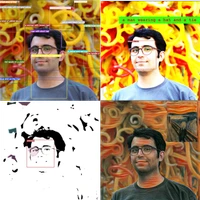
LMR: A Large-Scale Multi-Reference Dataset for Reference-based Super-Resolution
It is widely agreed that reference-based super-resolution (RefSR) achieves superior results by referring to similar high quality images, compared to single image super-resolution (SISR). Intuitively, the more references, the better performance. However, previous RefSR methods have all focused on single-reference image training, while multiple reference images are often available in testing or practical applications. The root cause of such training-testing mismatch is the absence of publicly available multi-reference SR training datasets, which greatly hinders research efforts on multi-reference super-resolution. To this end, we construct a large-scale, multi-reference super-resolution dataset, named LMR. It contains 112,142 groups of 300x300 training images, which is 10x of the existing largest RefSR dataset. The image size is also much larger. More importantly, each group is equipped with 5 reference images with different similarity levels. Furthermore, we propose a new baseline method for multi-reference super-resolution: MRefSR, including a Multi-Reference Attention Module (MAM) for feature fusion of an arbitrary number of reference images, and a Spatial Aware Filtering Module (SAFM) for the fused feature selection. The proposed MRefSR achieves significant improvements over state-of-the-art approaches on both quantitative and qualitative evaluations. Our code and data would be made available soon.
ConvLLaVA: Hierarchical Backbones as Visual Encoder for Large Multimodal Models
High-resolution Large Multimodal Models (LMMs) encounter the challenges of excessive visual tokens and quadratic visual complexity. Current high-resolution LMMs address the quadratic complexity while still generating excessive visual tokens. However, the redundancy in visual tokens is the key problem as it leads to more substantial compute. To mitigate this issue, we propose ConvLLaVA, which employs ConvNeXt, a hierarchical backbone, as the visual encoder of LMM to replace Vision Transformer (ViT). ConvLLaVA compresses high-resolution images into information-rich visual features, effectively preventing the generation of excessive visual tokens. To enhance the capabilities of ConvLLaVA, we propose two critical optimizations. Since the low-resolution pretrained ConvNeXt underperforms when directly applied on high resolution, we update it to bridge the gap. Moreover, since ConvNeXt's original compression ratio is inadequate for much higher resolution inputs, we train a successive stage to further compress the visual tokens, thereby reducing redundancy. These optimizations enable ConvLLaVA to support inputs of 1536x1536 resolution generating only 576 visual tokens, capable of handling images of arbitrary aspect ratios. Experimental results demonstrate that our method achieves competitive performance with state-of-the-art models on mainstream benchmarks. The ConvLLaVA model series are publicly available at https://github.com/alibaba/conv-llava.



Squeeze, Recover and Relabel: Dataset Condensation at ImageNet Scale From A New Perspective
We present a new dataset condensation framework termed Squeeze, Recover and Relabel (SRe^2L) that decouples the bilevel optimization of model and synthetic data during training, to handle varying scales of datasets, model architectures and image resolutions for efficient dataset condensation. The proposed method demonstrates flexibility across diverse dataset scales and exhibits multiple advantages in terms of arbitrary resolutions of synthesized images, low training cost and memory consumption with high-resolution synthesis, and the ability to scale up to arbitrary evaluation network architectures. Extensive experiments are conducted on Tiny-ImageNet and full ImageNet-1K datasets. Under 50 IPC, our approach achieves the highest 42.5% and 60.8% validation accuracy on Tiny-ImageNet and ImageNet-1K, outperforming all previous state-of-the-art methods by margins of 14.5% and 32.9%, respectively. Our approach also surpasses MTT in terms of speed by approximately 52times (ConvNet-4) and 16times (ResNet-18) faster with less memory consumption of 11.6times and 6.4times during data synthesis. Our code and condensed datasets of 50, 200 IPC with 4K recovery budget are available at https://github.com/VILA-Lab/SRe2L.
ControlAR: Controllable Image Generation with Autoregressive Models
Autoregressive (AR) models have reformulated image generation as next-token prediction, demonstrating remarkable potential and emerging as strong competitors to diffusion models. However, control-to-image generation, akin to ControlNet, remains largely unexplored within AR models. Although a natural approach, inspired by advancements in Large Language Models, is to tokenize control images into tokens and prefill them into the autoregressive model before decoding image tokens, it still falls short in generation quality compared to ControlNet and suffers from inefficiency. To this end, we introduce ControlAR, an efficient and effective framework for integrating spatial controls into autoregressive image generation models. Firstly, we explore control encoding for AR models and propose a lightweight control encoder to transform spatial inputs (e.g., canny edges or depth maps) into control tokens. Then ControlAR exploits the conditional decoding method to generate the next image token conditioned on the per-token fusion between control and image tokens, similar to positional encodings. Compared to prefilling tokens, using conditional decoding significantly strengthens the control capability of AR models but also maintains the model's efficiency. Furthermore, the proposed ControlAR surprisingly empowers AR models with arbitrary-resolution image generation via conditional decoding and specific controls. Extensive experiments can demonstrate the controllability of the proposed ControlAR for the autoregressive control-to-image generation across diverse inputs, including edges, depths, and segmentation masks. Furthermore, both quantitative and qualitative results indicate that ControlAR surpasses previous state-of-the-art controllable diffusion models, e.g., ControlNet++. Code, models, and demo will soon be available at https://github.com/hustvl/ControlAR.





FiTv2: Scalable and Improved Flexible Vision Transformer for Diffusion Model
Nature is infinitely resolution-free. In the context of this reality, existing diffusion models, such as Diffusion Transformers, often face challenges when processing image resolutions outside of their trained domain. To address this limitation, we conceptualize images as sequences of tokens with dynamic sizes, rather than traditional methods that perceive images as fixed-resolution grids. This perspective enables a flexible training strategy that seamlessly accommodates various aspect ratios during both training and inference, thus promoting resolution generalization and eliminating biases introduced by image cropping. On this basis, we present the Flexible Vision Transformer (FiT), a transformer architecture specifically designed for generating images with unrestricted resolutions and aspect ratios. We further upgrade the FiT to FiTv2 with several innovative designs, includingthe Query-Key vector normalization, the AdaLN-LoRA module, a rectified flow scheduler, and a Logit-Normal sampler. Enhanced by a meticulously adjusted network structure, FiTv2 exhibits 2times convergence speed of FiT. When incorporating advanced training-free extrapolation techniques, FiTv2 demonstrates remarkable adaptability in both resolution extrapolation and diverse resolution generation. Additionally, our exploration of the scalability of the FiTv2 model reveals that larger models exhibit better computational efficiency. Furthermore, we introduce an efficient post-training strategy to adapt a pre-trained model for the high-resolution generation. Comprehensive experiments demonstrate the exceptional performance of FiTv2 across a broad range of resolutions. We have released all the codes and models at https://github.com/whlzy/FiT to promote the exploration of diffusion transformer models for arbitrary-resolution image generation.

Recovering Realistic Texture in Image Super-resolution by Deep Spatial Feature Transform
Despite that convolutional neural networks (CNN) have recently demonstrated high-quality reconstruction for single-image super-resolution (SR), recovering natural and realistic texture remains a challenging problem. In this paper, we show that it is possible to recover textures faithful to semantic classes. In particular, we only need to modulate features of a few intermediate layers in a single network conditioned on semantic segmentation probability maps. This is made possible through a novel Spatial Feature Transform (SFT) layer that generates affine transformation parameters for spatial-wise feature modulation. SFT layers can be trained end-to-end together with the SR network using the same loss function. During testing, it accepts an input image of arbitrary size and generates a high-resolution image with just a single forward pass conditioned on the categorical priors. Our final results show that an SR network equipped with SFT can generate more realistic and visually pleasing textures in comparison to state-of-the-art SRGAN and EnhanceNet.
Learning Continuous Image Representation with Local Implicit Image Function
How to represent an image? While the visual world is presented in a continuous manner, machines store and see the images in a discrete way with 2D arrays of pixels. In this paper, we seek to learn a continuous representation for images. Inspired by the recent progress in 3D reconstruction with implicit neural representation, we propose Local Implicit Image Function (LIIF), which takes an image coordinate and the 2D deep features around the coordinate as inputs, predicts the RGB value at a given coordinate as an output. Since the coordinates are continuous, LIIF can be presented in arbitrary resolution. To generate the continuous representation for images, we train an encoder with LIIF representation via a self-supervised task with super-resolution. The learned continuous representation can be presented in arbitrary resolution even extrapolate to x30 higher resolution, where the training tasks are not provided. We further show that LIIF representation builds a bridge between discrete and continuous representation in 2D, it naturally supports the learning tasks with size-varied image ground-truths and significantly outperforms the method with resizing the ground-truths.
SINE: SINgle Image Editing with Text-to-Image Diffusion Models
Recent works on diffusion models have demonstrated a strong capability for conditioning image generation, e.g., text-guided image synthesis. Such success inspires many efforts trying to use large-scale pre-trained diffusion models for tackling a challenging problem--real image editing. Works conducted in this area learn a unique textual token corresponding to several images containing the same object. However, under many circumstances, only one image is available, such as the painting of the Girl with a Pearl Earring. Using existing works on fine-tuning the pre-trained diffusion models with a single image causes severe overfitting issues. The information leakage from the pre-trained diffusion models makes editing can not keep the same content as the given image while creating new features depicted by the language guidance. This work aims to address the problem of single-image editing. We propose a novel model-based guidance built upon the classifier-free guidance so that the knowledge from the model trained on a single image can be distilled into the pre-trained diffusion model, enabling content creation even with one given image. Additionally, we propose a patch-based fine-tuning that can effectively help the model generate images of arbitrary resolution. We provide extensive experiments to validate the design choices of our approach and show promising editing capabilities, including changing style, content addition, and object manipulation. The code is available for research purposes at https://github.com/zhang-zx/SINE.git .


Arbitrary-Scale Image Generation and Upsampling using Latent Diffusion Model and Implicit Neural Decoder
Super-resolution (SR) and image generation are important tasks in computer vision and are widely adopted in real-world applications. Most existing methods, however, generate images only at fixed-scale magnification and suffer from over-smoothing and artifacts. Additionally, they do not offer enough diversity of output images nor image consistency at different scales. Most relevant work applied Implicit Neural Representation (INR) to the denoising diffusion model to obtain continuous-resolution yet diverse and high-quality SR results. Since this model operates in the image space, the larger the resolution of image is produced, the more memory and inference time is required, and it also does not maintain scale-specific consistency. We propose a novel pipeline that can super-resolve an input image or generate from a random noise a novel image at arbitrary scales. The method consists of a pretrained auto-encoder, a latent diffusion model, and an implicit neural decoder, and their learning strategies. The proposed method adopts diffusion processes in a latent space, thus efficient, yet aligned with output image space decoded by MLPs at arbitrary scales. More specifically, our arbitrary-scale decoder is designed by the symmetric decoder w/o up-scaling from the pretrained auto-encoder, and Local Implicit Image Function (LIIF) in series. The latent diffusion process is learnt by the denoising and the alignment losses jointly. Errors in output images are backpropagated via the fixed decoder, improving the quality of output images. In the extensive experiments using multiple public benchmarks on the two tasks i.e. image super-resolution and novel image generation at arbitrary scales, the proposed method outperforms relevant methods in metrics of image quality, diversity and scale consistency. It is significantly better than the relevant prior-art in the inference speed and memory usage.
Thera: Aliasing-Free Arbitrary-Scale Super-Resolution with Neural Heat Fields
Recent approaches to arbitrary-scale single image super-resolution (ASR) use neural fields to represent continuous signals that can be sampled at arbitrary resolutions. However, point-wise queries of neural fields do not naturally match the point spread function (PSF) of pixels, which may cause aliasing in the super-resolved image. Existing methods attempt to mitigate this by approximating an integral version of the field at each scaling factor, compromising both fidelity and generalization. In this work, we introduce neural heat fields, a novel neural field formulation that inherently models a physically exact PSF. Our formulation enables analytically correct anti-aliasing at any desired output resolution, and -- unlike supersampling -- at no additional cost. Building on this foundation, we propose Thera, an end-to-end ASR method that substantially outperforms existing approaches, while being more parameter-efficient and offering strong theoretical guarantees. The project page is at https://therasr.github.io.

Arbitrary-steps Image Super-resolution via Diffusion Inversion
This study presents a new image super-resolution (SR) technique based on diffusion inversion, aiming at harnessing the rich image priors encapsulated in large pre-trained diffusion models to improve SR performance. We design a Partial noise Prediction strategy to construct an intermediate state of the diffusion model, which serves as the starting sampling point. Central to our approach is a deep noise predictor to estimate the optimal noise maps for the forward diffusion process. Once trained, this noise predictor can be used to initialize the sampling process partially along the diffusion trajectory, generating the desirable high-resolution result. Compared to existing approaches, our method offers a flexible and efficient sampling mechanism that supports an arbitrary number of sampling steps, ranging from one to five. Even with a single sampling step, our method demonstrates superior or comparable performance to recent state-of-the-art approaches. The code and model are publicly available at https://github.com/zsyOAOA/InvSR.



Effective Invertible Arbitrary Image Rescaling
Great successes have been achieved using deep learning techniques for image super-resolution (SR) with fixed scales. To increase its real world applicability, numerous models have also been proposed to restore SR images with arbitrary scale factors, including asymmetric ones where images are resized to different scales along horizontal and vertical directions. Though most models are only optimized for the unidirectional upscaling task while assuming a predefined downscaling kernel for low-resolution (LR) inputs, recent models based on Invertible Neural Networks (INN) are able to increase upscaling accuracy significantly by optimizing the downscaling and upscaling cycle jointly. However, limited by the INN architecture, it is constrained to fixed integer scale factors and requires one model for each scale. Without increasing model complexity, a simple and effective invertible arbitrary rescaling network (IARN) is proposed to achieve arbitrary image rescaling by training only one model in this work. Using innovative components like position-aware scale encoding and preemptive channel splitting, the network is optimized to convert the non-invertible rescaling cycle to an effectively invertible process. It is shown to achieve a state-of-the-art (SOTA) performance in bidirectional arbitrary rescaling without compromising perceptual quality in LR outputs. It is also demonstrated to perform well on tests with asymmetric scales using the same network architecture.
Lightweight Image Super-Resolution with Information Multi-distillation Network
In recent years, single image super-resolution (SISR) methods using deep convolution neural network (CNN) have achieved impressive results. Thanks to the powerful representation capabilities of the deep networks, numerous previous ways can learn the complex non-linear mapping between low-resolution (LR) image patches and their high-resolution (HR) versions. However, excessive convolutions will limit the application of super-resolution technology in low computing power devices. Besides, super-resolution of any arbitrary scale factor is a critical issue in practical applications, which has not been well solved in the previous approaches. To address these issues, we propose a lightweight information multi-distillation network (IMDN) by constructing the cascaded information multi-distillation blocks (IMDB), which contains distillation and selective fusion parts. Specifically, the distillation module extracts hierarchical features step-by-step, and fusion module aggregates them according to the importance of candidate features, which is evaluated by the proposed contrast-aware channel attention mechanism. To process real images with any sizes, we develop an adaptive cropping strategy (ACS) to super-resolve block-wise image patches using the same well-trained model. Extensive experiments suggest that the proposed method performs favorably against the state-of-the-art SR algorithms in term of visual quality, memory footprint, and inference time. Code is available at https://github.com/Zheng222/IMDN.
Zero-Shot Image Restoration Using Denoising Diffusion Null-Space Model
Most existing Image Restoration (IR) models are task-specific, which can not be generalized to different degradation operators. In this work, we propose the Denoising Diffusion Null-Space Model (DDNM), a novel zero-shot framework for arbitrary linear IR problems, including but not limited to image super-resolution, colorization, inpainting, compressed sensing, and deblurring. DDNM only needs a pre-trained off-the-shelf diffusion model as the generative prior, without any extra training or network modifications. By refining only the null-space contents during the reverse diffusion process, we can yield diverse results satisfying both data consistency and realness. We further propose an enhanced and robust version, dubbed DDNM+, to support noisy restoration and improve restoration quality for hard tasks. Our experiments on several IR tasks reveal that DDNM outperforms other state-of-the-art zero-shot IR methods. We also demonstrate that DDNM+ can solve complex real-world applications, e.g., old photo restoration.

M4-SAR: A Multi-Resolution, Multi-Polarization, Multi-Scene, Multi-Source Dataset and Benchmark for Optical-SAR Fusion Object Detection
Single-source remote sensing object detection using optical or SAR images struggles in complex environments. Optical images offer rich textural details but are often affected by low-light, cloud-obscured, or low-resolution conditions, reducing the detection performance. SAR images are robust to weather, but suffer from speckle noise and limited semantic expressiveness. Optical and SAR images provide complementary advantages, and fusing them can significantly improve the detection accuracy. However, progress in this field is hindered by the lack of large-scale, standardized datasets. To address these challenges, we propose the first comprehensive dataset for optical-SAR fusion object detection, named Multi-resolution, Multi-polarization, Multi-scene, Multi-source SAR dataset (M4-SAR). It contains 112,184 precisely aligned image pairs and nearly one million labeled instances with arbitrary orientations, spanning six key categories. To enable standardized evaluation, we develop a unified benchmarking toolkit that integrates six state-of-the-art multi-source fusion methods. Furthermore, we propose E2E-OSDet, a novel end-to-end multi-source fusion detection framework that mitigates cross-domain discrepancies and establishes a robust baseline for future studies. Extensive experiments on M4-SAR demonstrate that fusing optical and SAR data can improve mAP by 5.7\% over single-source inputs, with particularly significant gains in complex environments. The dataset and code are publicly available at https://github.com/wchao0601/M4-SAR.
Grounding of Textual Phrases in Images by Reconstruction
Grounding (i.e. localizing) arbitrary, free-form textual phrases in visual content is a challenging problem with many applications for human-computer interaction and image-text reference resolution. Few datasets provide the ground truth spatial localization of phrases, thus it is desirable to learn from data with no or little grounding supervision. We propose a novel approach which learns grounding by reconstructing a given phrase using an attention mechanism, which can be either latent or optimized directly. During training our approach encodes the phrase using a recurrent network language model and then learns to attend to the relevant image region in order to reconstruct the input phrase. At test time, the correct attention, i.e., the grounding, is evaluated. If grounding supervision is available it can be directly applied via a loss over the attention mechanism. We demonstrate the effectiveness of our approach on the Flickr 30k Entities and ReferItGame datasets with different levels of supervision, ranging from no supervision over partial supervision to full supervision. Our supervised variant improves by a large margin over the state-of-the-art on both datasets.
PIFu: Pixel-Aligned Implicit Function for High-Resolution Clothed Human Digitization
We introduce Pixel-aligned Implicit Function (PIFu), a highly effective implicit representation that locally aligns pixels of 2D images with the global context of their corresponding 3D object. Using PIFu, we propose an end-to-end deep learning method for digitizing highly detailed clothed humans that can infer both 3D surface and texture from a single image, and optionally, multiple input images. Highly intricate shapes, such as hairstyles, clothing, as well as their variations and deformations can be digitized in a unified way. Compared to existing representations used for 3D deep learning, PIFu can produce high-resolution surfaces including largely unseen regions such as the back of a person. In particular, it is memory efficient unlike the voxel representation, can handle arbitrary topology, and the resulting surface is spatially aligned with the input image. Furthermore, while previous techniques are designed to process either a single image or multiple views, PIFu extends naturally to arbitrary number of views. We demonstrate high-resolution and robust reconstructions on real world images from the DeepFashion dataset, which contains a variety of challenging clothing types. Our method achieves state-of-the-art performance on a public benchmark and outperforms the prior work for clothed human digitization from a single image.

EasyControl: Adding Efficient and Flexible Control for Diffusion Transformer
Recent advancements in Unet-based diffusion models, such as ControlNet and IP-Adapter, have introduced effective spatial and subject control mechanisms. However, the DiT (Diffusion Transformer) architecture still struggles with efficient and flexible control. To tackle this issue, we propose EasyControl, a novel framework designed to unify condition-guided diffusion transformers with high efficiency and flexibility. Our framework is built on three key innovations. First, we introduce a lightweight Condition Injection LoRA Module. This module processes conditional signals in isolation, acting as a plug-and-play solution. It avoids modifying the base model weights, ensuring compatibility with customized models and enabling the flexible injection of diverse conditions. Notably, this module also supports harmonious and robust zero-shot multi-condition generalization, even when trained only on single-condition data. Second, we propose a Position-Aware Training Paradigm. This approach standardizes input conditions to fixed resolutions, allowing the generation of images with arbitrary aspect ratios and flexible resolutions. At the same time, it optimizes computational efficiency, making the framework more practical for real-world applications. Third, we develop a Causal Attention Mechanism combined with the KV Cache technique, adapted for conditional generation tasks. This innovation significantly reduces the latency of image synthesis, improving the overall efficiency of the framework. Through extensive experiments, we demonstrate that EasyControl achieves exceptional performance across various application scenarios. These innovations collectively make our framework highly efficient, flexible, and suitable for a wide range of tasks.




Generative Powers of Ten
We present a method that uses a text-to-image model to generate consistent content across multiple image scales, enabling extreme semantic zooms into a scene, e.g., ranging from a wide-angle landscape view of a forest to a macro shot of an insect sitting on one of the tree branches. We achieve this through a joint multi-scale diffusion sampling approach that encourages consistency across different scales while preserving the integrity of each individual sampling process. Since each generated scale is guided by a different text prompt, our method enables deeper levels of zoom than traditional super-resolution methods that may struggle to create new contextual structure at vastly different scales. We compare our method qualitatively with alternative techniques in image super-resolution and outpainting, and show that our method is most effective at generating consistent multi-scale content.



FiT: Flexible Vision Transformer for Diffusion Model
Nature is infinitely resolution-free. In the context of this reality, existing diffusion models, such as Diffusion Transformers, often face challenges when processing image resolutions outside of their trained domain. To overcome this limitation, we present the Flexible Vision Transformer (FiT), a transformer architecture specifically designed for generating images with unrestricted resolutions and aspect ratios. Unlike traditional methods that perceive images as static-resolution grids, FiT conceptualizes images as sequences of dynamically-sized tokens. This perspective enables a flexible training strategy that effortlessly adapts to diverse aspect ratios during both training and inference phases, thus promoting resolution generalization and eliminating biases induced by image cropping. Enhanced by a meticulously adjusted network structure and the integration of training-free extrapolation techniques, FiT exhibits remarkable flexibility in resolution extrapolation generation. Comprehensive experiments demonstrate the exceptional performance of FiT across a broad range of resolutions, showcasing its effectiveness both within and beyond its training resolution distribution. Repository available at https://github.com/whlzy/FiT.


Composed Image Retrieval for Remote Sensing
This work introduces composed image retrieval to remote sensing. It allows to query a large image archive by image examples alternated by a textual description, enriching the descriptive power over unimodal queries, either visual or textual. Various attributes can be modified by the textual part, such as shape, color, or context. A novel method fusing image-to-image and text-to-image similarity is introduced. We demonstrate that a vision-language model possesses sufficient descriptive power and no further learning step or training data are necessary. We present a new evaluation benchmark focused on color, context, density, existence, quantity, and shape modifications. Our work not only sets the state-of-the-art for this task, but also serves as a foundational step in addressing a gap in the field of remote sensing image retrieval. Code at: https://github.com/billpsomas/rscir


Beyond LLaVA-HD: Diving into High-Resolution Large Multimodal Models
Seeing clearly with high resolution is a foundation of Large Multimodal Models (LMMs), which has been proven to be vital for visual perception and reasoning. Existing works usually employ a straightforward resolution upscaling method, where the image consists of global and local branches, with the latter being the sliced image patches but resized to the same resolution as the former. This means that higher resolution requires more local patches, resulting in exorbitant computational expenses, and meanwhile, the dominance of local image tokens may diminish the global context. In this paper, we dive into the problems and propose a new framework as well as an elaborate optimization strategy. Specifically, we extract contextual information from the global view using a mixture of adapters, based on the observation that different adapters excel at different tasks. With regard to local patches, learnable query embeddings are introduced to reduce image tokens, the most important tokens accounting for the user question will be further selected by a similarity-based selector. Our empirical results demonstrate a `less is more' pattern, where utilizing fewer but more informative local image tokens leads to improved performance. Besides, a significant challenge lies in the training strategy, as simultaneous end-to-end training of the global mining block and local compression block does not yield optimal results. We thus advocate for an alternating training way, ensuring balanced learning between global and local aspects. Finally, we also introduce a challenging dataset with high requirements for image detail, enhancing the training of the local compression layer. The proposed method, termed LMM with Sophisticated Tasks, Local image compression, and Mixture of global Experts (SliME), achieves leading performance across various benchmarks with only 2 million training data.

AdaptVision: Dynamic Input Scaling in MLLMs for Versatile Scene Understanding
Over the past few years, the advancement of Multimodal Large Language Models (MLLMs) has captured the wide interest of researchers, leading to numerous innovations to enhance MLLMs' comprehension. In this paper, we present AdaptVision, a multimodal large language model specifically designed to dynamically process input images at varying resolutions. We hypothesize that the requisite number of visual tokens for the model is contingent upon both the resolution and content of the input image. Generally, natural images with a lower information density can be effectively interpreted by the model using fewer visual tokens at reduced resolutions. In contrast, images containing textual content, such as documents with rich text, necessitate a higher number of visual tokens for accurate text interpretation due to their higher information density. Building on this insight, we devise a dynamic image partitioning module that adjusts the number of visual tokens according to the size and aspect ratio of images. This method mitigates distortion effects that arise from resizing images to a uniform resolution and dynamically optimizing the visual tokens input to the LLMs. Our model is capable of processing images with resolutions up to 1008times 1008. Extensive experiments across various datasets demonstrate that our method achieves impressive performance in handling vision-language tasks in both natural and text-related scenes. The source code and dataset are now publicly available at https://github.com/harrytea/AdaptVision.
NTIRE 2020 Challenge on Real-World Image Super-Resolution: Methods and Results
This paper reviews the NTIRE 2020 challenge on real world super-resolution. It focuses on the participating methods and final results. The challenge addresses the real world setting, where paired true high and low-resolution images are unavailable. For training, only one set of source input images is therefore provided along with a set of unpaired high-quality target images. In Track 1: Image Processing artifacts, the aim is to super-resolve images with synthetically generated image processing artifacts. This allows for quantitative benchmarking of the approaches \wrt a ground-truth image. In Track 2: Smartphone Images, real low-quality smart phone images have to be super-resolved. In both tracks, the ultimate goal is to achieve the best perceptual quality, evaluated using a human study. This is the second challenge on the subject, following AIM 2019, targeting to advance the state-of-the-art in super-resolution. To measure the performance we use the benchmark protocol from AIM 2019. In total 22 teams competed in the final testing phase, demonstrating new and innovative solutions to the problem.


See More Details: Efficient Image Super-Resolution by Experts Mining
Reconstructing high-resolution (HR) images from low-resolution (LR) inputs poses a significant challenge in image super-resolution (SR). While recent approaches have demonstrated the efficacy of intricate operations customized for various objectives, the straightforward stacking of these disparate operations can result in a substantial computational burden, hampering their practical utility. In response, we introduce SeemoRe, an efficient SR model employing expert mining. Our approach strategically incorporates experts at different levels, adopting a collaborative methodology. At the macro scale, our experts address rank-wise and spatial-wise informative features, providing a holistic understanding. Subsequently, the model delves into the subtleties of rank choice by leveraging a mixture of low-rank experts. By tapping into experts specialized in distinct key factors crucial for accurate SR, our model excels in uncovering intricate intra-feature details. This collaborative approach is reminiscent of the concept of "see more", allowing our model to achieve an optimal performance with minimal computational costs in efficient settings. The source will be publicly made available at https://github.com/eduardzamfir/seemoredetails
LEOPARD : A Vision Language Model For Text-Rich Multi-Image Tasks
Text-rich images, where text serves as the central visual element guiding the overall understanding, are prevalent in real-world applications, such as presentation slides, scanned documents, and webpage snapshots. Tasks involving multiple text-rich images are especially challenging, as they require not only understanding the content of individual images but reasoning about inter-relationships and logical flows across multiple visual inputs. Despite the importance of these scenarios, current multimodal large language models (MLLMs) struggle to handle such tasks due to two key challenges: (1) the scarcity of high-quality instruction tuning datasets for text-rich multi-image scenarios, and (2) the difficulty in balancing image resolution with visual feature sequence length. To address these challenges, we propose \OurMethod, a MLLM designed specifically for handling vision-language tasks involving multiple text-rich images. First, we curated about one million high-quality multimodal instruction-tuning data, tailored to text-rich, multi-image scenarios. Second, we developed an adaptive high-resolution multi-image encoding module to dynamically optimize the allocation of visual sequence length based on the original aspect ratios and resolutions of the input images. Experiments across a wide range of benchmarks demonstrate our model's superior capabilities in text-rich, multi-image evaluations and competitive performance in general domain evaluations.





DiffuseHigh: Training-free Progressive High-Resolution Image Synthesis through Structure Guidance
Recent surge in large-scale generative models has spurred the development of vast fields in computer vision. In particular, text-to-image diffusion models have garnered widespread adoption across diverse domain due to their potential for high-fidelity image generation. Nonetheless, existing large-scale diffusion models are confined to generate images of up to 1K resolution, which is far from meeting the demands of contemporary commercial applications. Directly sampling higher-resolution images often yields results marred by artifacts such as object repetition and distorted shapes. Addressing the aforementioned issues typically necessitates training or fine-tuning models on higher resolution datasets. However, this undertaking poses a formidable challenge due to the difficulty in collecting large-scale high-resolution contents and substantial computational resources. While several preceding works have proposed alternatives, they often fail to produce convincing results. In this work, we probe the generative ability of diffusion models at higher resolution beyond its original capability and propose a novel progressive approach that fully utilizes generated low-resolution image to guide the generation of higher resolution image. Our method obviates the need for additional training or fine-tuning which significantly lowers the burden of computational costs. Extensive experiments and results validate the efficiency and efficacy of our method. Project page: https://yhyun225.github.io/DiffuseHigh/

Unlimited-Size Diffusion Restoration
Recently, using diffusion models for zero-shot image restoration (IR) has become a new hot paradigm. This type of method only needs to use the pre-trained off-the-shelf diffusion models, without any finetuning, and can directly handle various IR tasks. The upper limit of the restoration performance depends on the pre-trained diffusion models, which are in rapid evolution. However, current methods only discuss how to deal with fixed-size images, but dealing with images of arbitrary sizes is very important for practical applications. This paper focuses on how to use those diffusion-based zero-shot IR methods to deal with any size while maintaining the excellent characteristics of zero-shot. A simple way to solve arbitrary size is to divide it into fixed-size patches and solve each patch independently. But this may yield significant artifacts since it neither considers the global semantics of all patches nor the local information of adjacent patches. Inspired by the Range-Null space Decomposition, we propose the Mask-Shift Restoration to address local incoherence and propose the Hierarchical Restoration to alleviate out-of-domain issues. Our simple, parameter-free approaches can be used not only for image restoration but also for image generation of unlimited sizes, with the potential to be a general tool for diffusion models. Code: https://github.com/wyhuai/DDNM/tree/main/hq_demo

Native Visual Understanding: Resolving Resolution Dilemmas in Vision-Language Models
Vision-Language Models (VLMs) face significant challenges when dealing with the diverse resolutions and aspect ratios of real-world images, as most existing models rely on fixed, low-resolution inputs. While recent studies have explored integrating native resolution visual encoding to improve model performance, such efforts remain fragmented and lack a systematic framework within the open-source community. Moreover, existing benchmarks fall short in evaluating VLMs under varied visual conditions, often neglecting resolution as a critical factor. To address the "Resolution Dilemma" stemming from both model design and benchmark limitations, we introduce RC-Bench, a novel benchmark specifically designed to systematically evaluate VLM capabilities under extreme visual conditions, with an emphasis on resolution and aspect ratio variations. In conjunction, we propose NativeRes-LLaVA, an open-source training framework that empowers VLMs to effectively process images at their native resolutions and aspect ratios. Based on RC-Bench and NativeRes-LLaVA, we conduct comprehensive experiments on existing visual encoding strategies. The results show that Native Resolution Visual Encoding significantly improves the performance of VLMs on RC-Bench as well as other resolution-centric benchmarks. Code is available at https://github.com/Niujunbo2002/NativeRes-LLaVA.

good4cir: Generating Detailed Synthetic Captions for Composed Image Retrieval
Composed image retrieval (CIR) enables users to search images using a reference image combined with textual modifications. Recent advances in vision-language models have improved CIR, but dataset limitations remain a barrier. Existing datasets often rely on simplistic, ambiguous, or insufficient manual annotations, hindering fine-grained retrieval. We introduce good4cir, a structured pipeline leveraging vision-language models to generate high-quality synthetic annotations. Our method involves: (1) extracting fine-grained object descriptions from query images, (2) generating comparable descriptions for target images, and (3) synthesizing textual instructions capturing meaningful transformations between images. This reduces hallucination, enhances modification diversity, and ensures object-level consistency. Applying our method improves existing datasets and enables creating new datasets across diverse domains. Results demonstrate improved retrieval accuracy for CIR models trained on our pipeline-generated datasets. We release our dataset construction framework to support further research in CIR and multi-modal retrieval.
ImageRAG: Enhancing Ultra High Resolution Remote Sensing Imagery Analysis with ImageRAG
Ultra High Resolution (UHR) remote sensing imagery (RSI) (e.g. 100,000 times 100,000 pixels or more) poses a significant challenge for current Remote Sensing Multimodal Large Language Models (RSMLLMs). If choose to resize the UHR image to standard input image size, the extensive spatial and contextual information that UHR images contain will be neglected. Otherwise, the original size of these images often exceeds the token limits of standard RSMLLMs, making it difficult to process the entire image and capture long-range dependencies to answer the query based on the abundant visual context. In this paper, we introduce ImageRAG for RS, a training-free framework to address the complexities of analyzing UHR remote sensing imagery. By transforming UHR remote sensing image analysis task to image's long context selection task, we design an innovative image contextual retrieval mechanism based on the Retrieval-Augmented Generation (RAG) technique, denoted as ImageRAG. ImageRAG's core innovation lies in its ability to selectively retrieve and focus on the most relevant portions of the UHR image as visual contexts that pertain to a given query. Fast path and slow path are proposed in this framework to handle this task efficiently and effectively. ImageRAG allows RSMLLMs to manage extensive context and spatial information from UHR RSI, ensuring the analysis is both accurate and efficient. Codebase will be released in https://github.com/om-ai-lab/ImageRAG
Learning Enriched Features for Real Image Restoration and Enhancement
With the goal of recovering high-quality image content from its degraded version, image restoration enjoys numerous applications, such as in surveillance, computational photography, medical imaging, and remote sensing. Recently, convolutional neural networks (CNNs) have achieved dramatic improvements over conventional approaches for image restoration task. Existing CNN-based methods typically operate either on full-resolution or on progressively low-resolution representations. In the former case, spatially precise but contextually less robust results are achieved, while in the latter case, semantically reliable but spatially less accurate outputs are generated. In this paper, we present a novel architecture with the collective goals of maintaining spatially-precise high-resolution representations through the entire network and receiving strong contextual information from the low-resolution representations. The core of our approach is a multi-scale residual block containing several key elements: (a) parallel multi-resolution convolution streams for extracting multi-scale features, (b) information exchange across the multi-resolution streams, (c) spatial and channel attention mechanisms for capturing contextual information, and (d) attention based multi-scale feature aggregation. In a nutshell, our approach learns an enriched set of features that combines contextual information from multiple scales, while simultaneously preserving the high-resolution spatial details. Extensive experiments on five real image benchmark datasets demonstrate that our method, named as MIRNet, achieves state-of-the-art results for a variety of image processing tasks, including image denoising, super-resolution, and image enhancement. The source code and pre-trained models are available at https://github.com/swz30/MIRNet.
ZoomEye: Enhancing Multimodal LLMs with Human-Like Zooming Capabilities through Tree-Based Image Exploration
An image, especially with high-resolution, typically consists of numerous visual elements, ranging from dominant large objects to fine-grained detailed objects. When perceiving such images, multimodal large language models~(MLLMs) face limitations due to the restricted input resolution of the pretrained vision encoder and the cluttered, dense context of the image, resulting in a focus on primary objects while easily overlooking detailed ones. In this paper, we propose Zoom Eye, a tree search algorithm designed to navigate the hierarchical and visual nature of images to capture relevant information. Zoom Eye conceptualizes an image as a tree, with each children node representing a zoomed sub-patch of the parent node and the root represents the overall image. Moreover, Zoom Eye is model-agnostic and training-free, so it enables any MLLMs to simulate human zooming actions by searching along the image tree from root to leaf nodes, seeking out pertinent information, and accurately responding to related queries. We experiment on a series of elaborate high-resolution benchmarks and the results demonstrate that Zoom Eye not only consistently improves the performance of a series base MLLMs with large margin~(e.g., LLaVA-v1.5-7B increases by 34.57\% on V^* Bench and 17.88\% on HR-Bench), but also enables small 7B MLLMs to outperform strong large models such as GPT-4o. Our code is available at https://github.com/om-ai-lab/ZoomEye{https://github.com/om-ai-lab/ZoomEye}.

Boosting Diffusion-Based Text Image Super-Resolution Model Towards Generalized Real-World Scenarios
Restoring low-resolution text images presents a significant challenge, as it requires maintaining both the fidelity and stylistic realism of the text in restored images. Existing text image restoration methods often fall short in hard situations, as the traditional super-resolution models cannot guarantee clarity, while diffusion-based methods fail to maintain fidelity. In this paper, we introduce a novel framework aimed at improving the generalization ability of diffusion models for text image super-resolution (SR), especially promoting fidelity. First, we propose a progressive data sampling strategy that incorporates diverse image types at different stages of training, stabilizing the convergence and improving the generalization. For the network architecture, we leverage a pre-trained SR prior to provide robust spatial reasoning capabilities, enhancing the model's ability to preserve textual information. Additionally, we employ a cross-attention mechanism to better integrate textual priors. To further reduce errors in textual priors, we utilize confidence scores to dynamically adjust the importance of textual features during training. Extensive experiments on real-world datasets demonstrate that our approach not only produces text images with more realistic visual appearances but also improves the accuracy of text structure.
Layered Diffusion Model for One-Shot High Resolution Text-to-Image Synthesis
We present a one-shot text-to-image diffusion model that can generate high-resolution images from natural language descriptions. Our model employs a layered U-Net architecture that simultaneously synthesizes images at multiple resolution scales. We show that this method outperforms the baseline of synthesizing images only at the target resolution, while reducing the computational cost per step. We demonstrate that higher resolution synthesis can be achieved by layering convolutions at additional resolution scales, in contrast to other methods which require additional models for super-resolution synthesis.

GlyphDraw2: Automatic Generation of Complex Glyph Posters with Diffusion Models and Large Language Models
Posters play a crucial role in marketing and advertising, contributing significantly to industrial design by enhancing visual communication and brand visibility. With recent advances in controllable text-to-image diffusion models, more concise research is now focusing on rendering text within synthetic images. Despite improvements in text rendering accuracy, the field of end-to-end poster generation remains underexplored. This complex task involves striking a balance between text rendering accuracy and automated layout to produce high-resolution images with variable aspect ratios. To tackle this challenge, we propose an end-to-end text rendering framework employing a triple cross-attention mechanism rooted in align learning, designed to create precise poster text within detailed contextual backgrounds. Additionally, we introduce a high-resolution dataset that exceeds 1024 pixels in image resolution. Our approach leverages the SDXL architecture. Extensive experiments validate the ability of our method to generate poster images featuring intricate and contextually rich backgrounds. Codes will be available at https://github.com/OPPO-Mente-Lab/GlyphDraw2.

UltraPixel: Advancing Ultra-High-Resolution Image Synthesis to New Peaks
Ultra-high-resolution image generation poses great challenges, such as increased semantic planning complexity and detail synthesis difficulties, alongside substantial training resource demands. We present UltraPixel, a novel architecture utilizing cascade diffusion models to generate high-quality images at multiple resolutions (e.g., 1K to 6K) within a single model, while maintaining computational efficiency. UltraPixel leverages semantics-rich representations of lower-resolution images in the later denoising stage to guide the whole generation of highly detailed high-resolution images, significantly reducing complexity. Furthermore, we introduce implicit neural representations for continuous upsampling and scale-aware normalization layers adaptable to various resolutions. Notably, both low- and high-resolution processes are performed in the most compact space, sharing the majority of parameters with less than 3% additional parameters for high-resolution outputs, largely enhancing training and inference efficiency. Our model achieves fast training with reduced data requirements, producing photo-realistic high-resolution images and demonstrating state-of-the-art performance in extensive experiments.
UltraHR-100K: Enhancing UHR Image Synthesis with A Large-Scale High-Quality Dataset
Ultra-high-resolution (UHR) text-to-image (T2I) generation has seen notable progress. However, two key challenges remain : 1) the absence of a large-scale high-quality UHR T2I dataset, and (2) the neglect of tailored training strategies for fine-grained detail synthesis in UHR scenarios. To tackle the first challenge, we introduce UltraHR-100K, a high-quality dataset of 100K UHR images with rich captions, offering diverse content and strong visual fidelity. Each image exceeds 3K resolution and is rigorously curated based on detail richness, content complexity, and aesthetic quality. To tackle the second challenge, we propose a frequency-aware post-training method that enhances fine-detail generation in T2I diffusion models. Specifically, we design (i) Detail-Oriented Timestep Sampling (DOTS) to focus learning on detail-critical denoising steps, and (ii) Soft-Weighting Frequency Regularization (SWFR), which leverages Discrete Fourier Transform (DFT) to softly constrain frequency components, encouraging high-frequency detail preservation. Extensive experiments on our proposed UltraHR-eval4K benchmarks demonstrate that our approach significantly improves the fine-grained detail quality and overall fidelity of UHR image generation. The code is available at https://github.com/NJU-PCALab/UltraHR-100k{here}.

Ultra-Resolution Adaptation with Ease
Text-to-image diffusion models have achieved remarkable progress in recent years. However, training models for high-resolution image generation remains challenging, particularly when training data and computational resources are limited. In this paper, we explore this practical problem from two key perspectives: data and parameter efficiency, and propose a set of key guidelines for ultra-resolution adaptation termed URAE. For data efficiency, we theoretically and empirically demonstrate that synthetic data generated by some teacher models can significantly promote training convergence. For parameter efficiency, we find that tuning minor components of the weight matrices outperforms widely-used low-rank adapters when synthetic data are unavailable, offering substantial performance gains while maintaining efficiency. Additionally, for models leveraging guidance distillation, such as FLUX, we show that disabling classifier-free guidance, i.e., setting the guidance scale to 1 during adaptation, is crucial for satisfactory performance. Extensive experiments validate that URAE achieves comparable 2K-generation performance to state-of-the-art closed-source models like FLUX1.1 [Pro] Ultra with only 3K samples and 2K iterations, while setting new benchmarks for 4K-resolution generation. Codes are available https://github.com/Huage001/URAE{here}.
Monkey: Image Resolution and Text Label Are Important Things for Large Multi-modal Models
Large Multimodal Models have demonstrated impressive capabilities in understanding general vision-language tasks. However, due to the limitation of supported input resolution (e.g., 448 x 448) as well as the inexhaustive description of the training image-text pair, these models often encounter challenges when dealing with intricate scene understandings and narratives. Here we address the problem by proposing the Monkey. Our contributions are two-fold: 1) without pretraining from the start, our method can be built upon an existing vision encoder (e.g., vit-BigHuge) to effectively improve the input resolution capacity up to 896 x 1344 pixels; 2) we propose a multi-level description generation method, which automatically provides rich information that can guide model to learn contextual association between scenes and objects. Our extensive testing across more than 16 distinct datasets reveals that Monkey achieves consistently competitive performance over the existing LMMs on fundamental tasks, such as Image Captioning, General Visual Question Answering (VQA), and Document-oriented VQA. Models, interactive demo, and the source code are provided at the following https://github.com/Yuliang-Liu/Monkey.
Creatively Upscaling Images with Global-Regional Priors
Contemporary diffusion models show remarkable capability in text-to-image generation, while still being limited to restricted resolutions (e.g., 1,024 X 1,024). Recent advances enable tuning-free higher-resolution image generation by recycling pre-trained diffusion models and extending them via regional denoising or dilated sampling/convolutions. However, these models struggle to simultaneously preserve global semantic structure and produce creative regional details in higher-resolution images. To address this, we present C-Upscale, a new recipe of tuning-free image upscaling that pivots on global-regional priors derived from given global prompt and estimated regional prompts via Multimodal LLM. Technically, the low-frequency component of low-resolution image is recognized as global structure prior to encourage global semantic consistency in high-resolution generation. Next, we perform regional attention control to screen cross-attention between global prompt and each region during regional denoising, leading to regional attention prior that alleviates object repetition issue. The estimated regional prompts containing rich descriptive details further act as regional semantic prior to fuel the creativity of regional detail generation. Both quantitative and qualitative evaluations demonstrate that our C-Upscale manages to generate ultra-high-resolution images (e.g., 4,096 X 4,096 and 8,192 X 8,192) with higher visual fidelity and more creative regional details.

Greedy Growing Enables High-Resolution Pixel-Based Diffusion Models
We address the long-standing problem of how to learn effective pixel-based image diffusion models at scale, introducing a remarkably simple greedy growing method for stable training of large-scale, high-resolution models. without the needs for cascaded super-resolution components. The key insight stems from careful pre-training of core components, namely, those responsible for text-to-image alignment {\it vs.} high-resolution rendering. We first demonstrate the benefits of scaling a {\it Shallow UNet}, with no down(up)-sampling enc(dec)oder. Scaling its deep core layers is shown to improve alignment, object structure, and composition. Building on this core model, we propose a greedy algorithm that grows the architecture into high-resolution end-to-end models, while preserving the integrity of the pre-trained representation, stabilizing training, and reducing the need for large high-resolution datasets. This enables a single stage model capable of generating high-resolution images without the need of a super-resolution cascade. Our key results rely on public datasets and show that we are able to train non-cascaded models up to 8B parameters with no further regularization schemes. Vermeer, our full pipeline model trained with internal datasets to produce 1024x1024 images, without cascades, is preferred by 44.0% vs. 21.4% human evaluators over SDXL.




How Far Are We to GPT-4V? Closing the Gap to Commercial Multimodal Models with Open-Source Suites
In this report, we introduce InternVL 1.5, an open-source multimodal large language model (MLLM) to bridge the capability gap between open-source and proprietary commercial models in multimodal understanding. We introduce three simple improvements: (1) Strong Vision Encoder: we explored a continuous learning strategy for the large-scale vision foundation model -- InternViT-6B, boosting its visual understanding capabilities, and making it can be transferred and reused in different LLMs. (2) Dynamic High-Resolution: we divide images into tiles ranging from 1 to 40 of 448times448 pixels according to the aspect ratio and resolution of the input images, which supports up to 4K resolution input. (3) High-Quality Bilingual Dataset: we carefully collected a high-quality bilingual dataset that covers common scenes, document images, and annotated them with English and Chinese question-answer pairs, significantly enhancing performance in OCR- and Chinese-related tasks. We evaluate InternVL 1.5 through a series of benchmarks and comparative studies. Compared to both open-source and proprietary models, InternVL 1.5 shows competitive performance, achieving state-of-the-art results in 8 of 18 benchmarks. Code has been released at https://github.com/OpenGVLab/InternVL.





Human Vision Constrained Super-Resolution
Modern deep-learning super-resolution (SR) techniques process images and videos independently of the underlying content and viewing conditions. However, the sensitivity of the human visual system (HVS) to image details changes depending on the underlying image characteristics, such as spatial frequency, luminance, color, contrast, or motion; as well viewing condition aspects such as ambient lighting and distance to the display. This observation suggests that computational resources spent on up-sampling images/videos may be wasted whenever a viewer cannot resolve the synthesized details i.e the resolution of details exceeds the resolving capability of human vision. Motivated by this observation, we propose a human vision inspired and architecture-agnostic approach for controlling SR techniques to deliver visually optimal results while limiting computational complexity. Its core is an explicit Human Visual Processing Framework (HVPF) that dynamically and locally guides SR methods according to human sensitivity to specific image details and viewing conditions. We demonstrate the application of our framework in combination with network branching to improve the computational efficiency of SR methods. Quantitative and qualitative evaluations, including user studies, demonstrate the effectiveness of our approach in reducing FLOPS by factors of 2times and greater, without sacrificing perceived quality.
No Pixel Left Behind: A Detail-Preserving Architecture for Robust High-Resolution AI-Generated Image Detection
The rapid growth of high-resolution, meticulously crafted AI-generated images poses a significant challenge to existing detection methods, which are often trained and evaluated on low-resolution, automatically generated datasets that do not align with the complexities of high-resolution scenarios. A common practice is to resize or center-crop high-resolution images to fit standard network inputs. However, without full coverage of all pixels, such strategies risk either obscuring subtle, high-frequency artifacts or discarding information from uncovered regions, leading to input information loss. In this paper, we introduce the High-Resolution Detail-Aggregation Network (HiDA-Net), a novel framework that ensures no pixel is left behind. We use the Feature Aggregation Module (FAM), which fuses features from multiple full-resolution local tiles with a down-sampled global view of the image. These local features are aggregated and fused with global representations for final prediction, ensuring that native-resolution details are preserved and utilized for detection. To enhance robustness against challenges such as localized AI manipulations and compression, we introduce Token-wise Forgery Localization (TFL) module for fine-grained spatial sensitivity and JPEG Quality Factor Estimation (QFE) module to disentangle generative artifacts from compression noise explicitly. Furthermore, to facilitate future research, we introduce HiRes-50K, a new challenging benchmark consisting of 50,568 images with up to 64 megapixels. Extensive experiments show that HiDA-Net achieves state-of-the-art, increasing accuracy by over 13% on the challenging Chameleon dataset and 10% on our HiRes-50K.
MagicLens: Self-Supervised Image Retrieval with Open-Ended Instructions
Image retrieval, i.e., finding desired images given a reference image, inherently encompasses rich, multi-faceted search intents that are difficult to capture solely using image-based measures. Recent work leverages text instructions to allow users to more freely express their search intents. However, existing work primarily focuses on image pairs that are visually similar and/or can be characterized by a small set of pre-defined relations. The core thesis of this paper is that text instructions can enable retrieving images with richer relations beyond visual similarity. To show this, we introduce MagicLens, a series of self-supervised image retrieval models that support open-ended instructions. MagicLens is built on a key novel insight: image pairs that naturally occur on the same web pages contain a wide range of implicit relations (e.g., inside view of), and we can bring those implicit relations explicit by synthesizing instructions via large multimodal models (LMMs) and large language models (LLMs). Trained on 36.7M (query image, instruction, target image) triplets with rich semantic relations mined from the web, MagicLens achieves comparable or better results on eight benchmarks of various image retrieval tasks than prior state-of-the-art (SOTA) methods. Remarkably, it outperforms previous SOTA but with a 50X smaller model size on multiple benchmarks. Additional human analyses on a 1.4M-image unseen corpus further demonstrate the diversity of search intents supported by MagicLens.



Multiresolution Textual Inversion
We extend Textual Inversion to learn pseudo-words that represent a concept at different resolutions. This allows us to generate images that use the concept with different levels of detail and also to manipulate different resolutions using language. Once learned, the user can generate images at different levels of agreement to the original concept; "A photo of S^*(0)" produces the exact object while the prompt "A photo of S^*(0.8)" only matches the rough outlines and colors. Our framework allows us to generate images that use different resolutions of an image (e.g. details, textures, styles) as separate pseudo-words that can be composed in various ways. We open-soure our code in the following URL: https://github.com/giannisdaras/multires_textual_inversion

Image Super-Resolution using Explicit Perceptual Loss
This paper proposes an explicit way to optimize the super-resolution network for generating visually pleasing images. The previous approaches use several loss functions which is hard to interpret and has the implicit relationships to improve the perceptual score. We show how to exploit the machine learning based model which is directly trained to provide the perceptual score on generated images. It is believed that these models can be used to optimizes the super-resolution network which is easier to interpret. We further analyze the characteristic of the existing loss and our proposed explicit perceptual loss for better interpretation. The experimental results show the explicit approach has a higher perceptual score than other approaches. Finally, we demonstrate the relation of explicit perceptual loss and visually pleasing images using subjective evaluation.
Edge Enhanced Image Style Transfer via Transformers
In recent years, arbitrary image style transfer has attracted more and more attention. Given a pair of content and style images, a stylized one is hoped that retains the content from the former while catching style patterns from the latter. However, it is difficult to simultaneously keep well the trade-off between the content details and the style features. To stylize the image with sufficient style patterns, the content details may be damaged and sometimes the objects of images can not be distinguished clearly. For this reason, we present a new transformer-based method named STT for image style transfer and an edge loss which can enhance the content details apparently to avoid generating blurred results for excessive rendering on style features. Qualitative and quantitative experiments demonstrate that STT achieves comparable performance to state-of-the-art image style transfer methods while alleviating the content leak problem.

SeeSR: Towards Semantics-Aware Real-World Image Super-Resolution
Owe to the powerful generative priors, the pre-trained text-to-image (T2I) diffusion models have become increasingly popular in solving the real-world image super-resolution problem. However, as a consequence of the heavy quality degradation of input low-resolution (LR) images, the destruction of local structures can lead to ambiguous image semantics. As a result, the content of reproduced high-resolution image may have semantic errors, deteriorating the super-resolution performance. To address this issue, we present a semantics-aware approach to better preserve the semantic fidelity of generative real-world image super-resolution. First, we train a degradation-aware prompt extractor, which can generate accurate soft and hard semantic prompts even under strong degradation. The hard semantic prompts refer to the image tags, aiming to enhance the local perception ability of the T2I model, while the soft semantic prompts compensate for the hard ones to provide additional representation information. These semantic prompts encourage the T2I model to generate detailed and semantically accurate results. Furthermore, during the inference process, we integrate the LR images into the initial sampling noise to mitigate the diffusion model's tendency to generate excessive random details. The experiments show that our method can reproduce more realistic image details and hold better the semantics. The source code of our method can be found at https://github.com/cswry/SeeSR.
FineCIR: Explicit Parsing of Fine-Grained Modification Semantics for Composed Image Retrieval
Composed Image Retrieval (CIR) facilitates image retrieval through a multimodal query consisting of a reference image and modification text. The reference image defines the retrieval context, while the modification text specifies desired alterations. However, existing CIR datasets predominantly employ coarse-grained modification text (CoarseMT), which inadequately captures fine-grained retrieval intents. This limitation introduces two key challenges: (1) ignoring detailed differences leads to imprecise positive samples, and (2) greater ambiguity arises when retrieving visually similar images. These issues degrade retrieval accuracy, necessitating manual result filtering or repeated queries. To address these limitations, we develop a robust fine-grained CIR data annotation pipeline that minimizes imprecise positive samples and enhances CIR systems' ability to discern modification intents accurately. Using this pipeline, we refine the FashionIQ and CIRR datasets to create two fine-grained CIR datasets: Fine-FashionIQ and Fine-CIRR. Furthermore, we introduce FineCIR, the first CIR framework explicitly designed to parse the modification text. FineCIR effectively captures fine-grained modification semantics and aligns them with ambiguous visual entities, enhancing retrieval precision. Extensive experiments demonstrate that FineCIR consistently outperforms state-of-the-art CIR baselines on both fine-grained and traditional CIR benchmark datasets. Our FineCIR code and fine-grained CIR datasets are available at https://github.com/SDU-L/FineCIR.git.


Boosting Resolution Generalization of Diffusion Transformers with Randomized Positional Encodings
Resolution generalization in image generation tasks enables the production of higher-resolution images with lower training resolution overhead. However, a significant challenge in resolution generalization, particularly in the widely used Diffusion Transformers, lies in the mismatch between the positional encodings encountered during testing and those used during training. While existing methods have employed techniques such as interpolation, extrapolation, or their combinations, none have fully resolved this issue. In this paper, we propose a novel two-dimensional randomized positional encodings (RPE-2D) framework that focuses on learning positional order of image patches instead of the specific distances between them, enabling seamless high- and low-resolution image generation without requiring high- and low-resolution image training. Specifically, RPE-2D independently selects positions over a broader range along both the horizontal and vertical axes, ensuring that all position encodings are trained during the inference phase, thus improving resolution generalization. Additionally, we propose a random data augmentation technique to enhance the modeling of position order. To address the issue of image cropping caused by the augmentation, we introduce corresponding micro-conditioning to enable the model to perceive the specific cropping patterns. On the ImageNet dataset, our proposed RPE-2D achieves state-of-the-art resolution generalization performance, outperforming existing competitive methods when trained at a resolution of 256 times 256 and inferred at 384 times 384 and 512 times 512, as well as when scaling from 512 times 512 to 768 times 768 and 1024 times 1024. And it also exhibits outstanding capabilities in low-resolution image generation, multi-stage training acceleration and multi-resolution inheritance.
Inf-DiT: Upsampling Any-Resolution Image with Memory-Efficient Diffusion Transformer
Diffusion models have shown remarkable performance in image generation in recent years. However, due to a quadratic increase in memory during generating ultra-high-resolution images (e.g. 4096*4096), the resolution of generated images is often limited to 1024*1024. In this work. we propose a unidirectional block attention mechanism that can adaptively adjust the memory overhead during the inference process and handle global dependencies. Building on this module, we adopt the DiT structure for upsampling and develop an infinite super-resolution model capable of upsampling images of various shapes and resolutions. Comprehensive experiments show that our model achieves SOTA performance in generating ultra-high-resolution images in both machine and human evaluation. Compared to commonly used UNet structures, our model can save more than 5x memory when generating 4096*4096 images. The project URL is https://github.com/THUDM/Inf-DiT.


Training-free Diffusion Model Adaptation for Variable-Sized Text-to-Image Synthesis
Diffusion models (DMs) have recently gained attention with state-of-the-art performance in text-to-image synthesis. Abiding by the tradition in deep learning, DMs are trained and evaluated on the images with fixed sizes. However, users are demanding for various images with specific sizes and various aspect ratio. This paper focuses on adapting text-to-image diffusion models to handle such variety while maintaining visual fidelity. First we observe that, during the synthesis, lower resolution images suffer from incomplete object portrayal, while higher resolution images exhibit repetitively disordered presentation. Next, we establish a statistical relationship indicating that attention entropy changes with token quantity, suggesting that models aggregate spatial information in proportion to image resolution. The subsequent interpretation on our observations is that objects are incompletely depicted due to limited spatial information for low resolutions, while repetitively disorganized presentation arises from redundant spatial information for high resolutions. From this perspective, we propose a scaling factor to alleviate the change of attention entropy and mitigate the defective pattern observed. Extensive experimental results validate the efficacy of the proposed scaling factor, enabling models to achieve better visual effects, image quality, and text alignment. Notably, these improvements are achieved without additional training or fine-tuning techniques.
MSPE: Multi-Scale Patch Embedding Prompts Vision Transformers to Any Resolution
Although Vision Transformers (ViTs) have recently advanced computer vision tasks significantly, an important real-world problem was overlooked: adapting to variable input resolutions. Typically, images are resized to a fixed resolution, such as 224x224, for efficiency during training and inference. However, uniform input size conflicts with real-world scenarios where images naturally vary in resolution. Modifying the preset resolution of a model may severely degrade the performance. In this work, we propose to enhance the model adaptability to resolution variation by optimizing the patch embedding. The proposed method, called Multi-Scale Patch Embedding (MSPE), substitutes the standard patch embedding with multiple variable-sized patch kernels and selects the best parameters for different resolutions, eliminating the need to resize the original image. Our method does not require high-cost training or modifications to other parts, making it easy to apply to most ViT models. Experiments in image classification, segmentation, and detection tasks demonstrate the effectiveness of MSPE, yielding superior performance on low-resolution inputs and performing comparably on high-resolution inputs with existing methods.

Enhanced Deep Residual Networks for Single Image Super-Resolution
Recent research on super-resolution has progressed with the development of deep convolutional neural networks (DCNN). In particular, residual learning techniques exhibit improved performance. In this paper, we develop an enhanced deep super-resolution network (EDSR) with performance exceeding those of current state-of-the-art SR methods. The significant performance improvement of our model is due to optimization by removing unnecessary modules in conventional residual networks. The performance is further improved by expanding the model size while we stabilize the training procedure. We also propose a new multi-scale deep super-resolution system (MDSR) and training method, which can reconstruct high-resolution images of different upscaling factors in a single model. The proposed methods show superior performance over the state-of-the-art methods on benchmark datasets and prove its excellence by winning the NTIRE2017 Super-Resolution Challenge.

AutoLUT: LUT-Based Image Super-Resolution with Automatic Sampling and Adaptive Residual Learning
In recent years, the increasing popularity of Hi-DPI screens has driven a rising demand for high-resolution images. However, the limited computational power of edge devices poses a challenge in deploying complex super-resolution neural networks, highlighting the need for efficient methods. While prior works have made significant progress, they have not fully exploited pixel-level information. Moreover, their reliance on fixed sampling patterns limits both accuracy and the ability to capture fine details in low-resolution images. To address these challenges, we introduce two plug-and-play modules designed to capture and leverage pixel information effectively in Look-Up Table (LUT) based super-resolution networks. Our method introduces Automatic Sampling (AutoSample), a flexible LUT sampling approach where sampling weights are automatically learned during training to adapt to pixel variations and expand the receptive field without added inference cost. We also incorporate Adaptive Residual Learning (AdaRL) to enhance inter-layer connections, enabling detailed information flow and improving the network's ability to reconstruct fine details. Our method achieves significant performance improvements on both MuLUT and SPF-LUT while maintaining similar storage sizes. Specifically, for MuLUT, we achieve a PSNR improvement of approximately +0.20 dB improvement on average across five datasets. For SPF-LUT, with more than a 50% reduction in storage space and about a 2/3 reduction in inference time, our method still maintains performance comparable to the original. The code is available at https://github.com/SuperKenVery/AutoLUT.


High-Resolution Image Inpainting using Multi-Scale Neural Patch Synthesis
Recent advances in deep learning have shown exciting promise in filling large holes in natural images with semantically plausible and context aware details, impacting fundamental image manipulation tasks such as object removal. While these learning-based methods are significantly more effective in capturing high-level features than prior techniques, they can only handle very low-resolution inputs due to memory limitations and difficulty in training. Even for slightly larger images, the inpainted regions would appear blurry and unpleasant boundaries become visible. We propose a multi-scale neural patch synthesis approach based on joint optimization of image content and texture constraints, which not only preserves contextual structures but also produces high-frequency details by matching and adapting patches with the most similar mid-layer feature correlations of a deep classification network. We evaluate our method on the ImageNet and Paris Streetview datasets and achieved state-of-the-art inpainting accuracy. We show our approach produces sharper and more coherent results than prior methods, especially for high-resolution images.

SRFormer: Permuted Self-Attention for Single Image Super-Resolution
Previous works have shown that increasing the window size for Transformer-based image super-resolution models (e.g., SwinIR) can significantly improve the model performance but the computation overhead is also considerable. In this paper, we present SRFormer, a simple but novel method that can enjoy the benefit of large window self-attention but introduces even less computational burden. The core of our SRFormer is the permuted self-attention (PSA), which strikes an appropriate balance between the channel and spatial information for self-attention. Our PSA is simple and can be easily applied to existing super-resolution networks based on window self-attention. Without any bells and whistles, we show that our SRFormer achieves a 33.86dB PSNR score on the Urban100 dataset, which is 0.46dB higher than that of SwinIR but uses fewer parameters and computations. We hope our simple and effective approach can serve as a useful tool for future research in super-resolution model design.


The Tenth NTIRE 2025 Efficient Super-Resolution Challenge Report
This paper presents a comprehensive review of the NTIRE 2025 Challenge on Single-Image Efficient Super-Resolution (ESR). The challenge aimed to advance the development of deep models that optimize key computational metrics, i.e., runtime, parameters, and FLOPs, while achieving a PSNR of at least 26.90 dB on the DIV2K_LSDIR_valid dataset and 26.99 dB on the DIV2K_LSDIR_test dataset. A robust participation saw 244 registered entrants, with 43 teams submitting valid entries. This report meticulously analyzes these methods and results, emphasizing groundbreaking advancements in state-of-the-art single-image ESR techniques. The analysis highlights innovative approaches and establishes benchmarks for future research in the field.




Rethinking Image Evaluation in Super-Resolution
While recent advancing image super-resolution (SR) techniques are continually improving the perceptual quality of their outputs, they can usually fail in quantitative evaluations. This inconsistency leads to a growing distrust in existing image metrics for SR evaluations. Though image evaluation depends on both the metric and the reference ground truth (GT), researchers typically do not inspect the role of GTs, as they are generally accepted as `perfect' references. However, due to the data being collected in the early years and the ignorance of controlling other types of distortions, we point out that GTs in existing SR datasets can exhibit relatively poor quality, which leads to biased evaluations. Following this observation, in this paper, we are interested in the following questions: Are GT images in existing SR datasets 100% trustworthy for model evaluations? How does GT quality affect this evaluation? And how to make fair evaluations if there exist imperfect GTs? To answer these questions, this paper presents two main contributions. First, by systematically analyzing seven state-of-the-art SR models across three real-world SR datasets, we show that SR performances can be consistently affected across models by low-quality GTs, and models can perform quite differently when GT quality is controlled. Second, we propose a novel perceptual quality metric, Relative Quality Index (RQI), that measures the relative quality discrepancy of image pairs, thus issuing the biased evaluations caused by unreliable GTs. Our proposed model achieves significantly better consistency with human opinions. We expect our work to provide insights for the SR community on how future datasets, models, and metrics should be developed.

JAFAR: Jack up Any Feature at Any Resolution
Foundation Vision Encoders have become essential for a wide range of dense vision tasks. However, their low-resolution spatial feature outputs necessitate feature upsampling to produce the high-resolution modalities required for downstream tasks. In this work, we introduce JAFAR, a lightweight and flexible feature upsampler that enhances the spatial resolution of visual features from any Foundation Vision Encoder to an arbitrary target resolution. JAFAR employs an attention-based module designed to promote semantic alignment between high-resolution queries, derived from low-level image features, and semantically enriched low-resolution keys, using Spatial Feature Transform (SFT) modulation. Notably, despite the absence of high-resolution supervision, we demonstrate that learning at low upsampling ratios and resolutions generalizes remarkably well to significantly higher output scales. Extensive experiments show that JAFAR effectively recovers fine-grained spatial details and consistently outperforms existing feature upsampling methods across a diverse set of downstream tasks. Project page at https://jafar-upsampler.github.io



Category-level Text-to-Image Retrieval Improved: Bridging the Domain Gap with Diffusion Models and Vision Encoders
This work explores text-to-image retrieval for queries that specify or describe a semantic category. While vision-and-language models (VLMs) like CLIP offer a straightforward open-vocabulary solution, they map text and images to distant regions in the representation space, limiting retrieval performance. To bridge this modality gap, we propose a two-step approach. First, we transform the text query into a visual query using a generative diffusion model. Then, we estimate image-to-image similarity with a vision model. Additionally, we introduce an aggregation network that combines multiple generated images into a single vector representation and fuses similarity scores across both query modalities. Our approach leverages advancements in vision encoders, VLMs, and text-to-image generation models. Extensive evaluations show that it consistently outperforms retrieval methods relying solely on text queries. Source code is available at: https://github.com/faixan-khan/cletir

QuantNAS for super resolution: searching for efficient quantization-friendly architectures against quantization noise
There is a constant need for high-performing and computationally efficient neural network models for image super-resolution: computationally efficient models can be used via low-capacity devices and reduce carbon footprints. One way to obtain such models is to compress models, e.g. quantization. Another way is a neural architecture search that automatically discovers new, more efficient solutions. We propose a novel quantization-aware procedure, the QuantNAS that combines pros of these two approaches. To make QuantNAS work, the procedure looks for quantization-friendly super-resolution models. The approach utilizes entropy regularization, quantization noise, and Adaptive Deviation for Quantization (ADQ) module to enhance the search procedure. The entropy regularization technique prioritizes a single operation within each block of the search space. Adding quantization noise to parameters and activations approximates model degradation after quantization, resulting in a more quantization-friendly architectures. ADQ helps to alleviate problems caused by Batch Norm blocks in super-resolution models. Our experimental results show that the proposed approximations are better for search procedure than direct model quantization. QuantNAS discovers architectures with better PSNR/BitOps trade-off than uniform or mixed precision quantization of fixed architectures. We showcase the effectiveness of our method through its application to two search spaces inspired by the state-of-the-art SR models and RFDN. Thus, anyone can design a proper search space based on an existing architecture and apply our method to obtain better quality and efficiency. The proposed procedure is 30\% faster than direct weight quantization and is more stable.


Adaptive Patch Exiting for Scalable Single Image Super-Resolution
Since the future of computing is heterogeneous, scalability is a crucial problem for single image super-resolution. Recent works try to train one network, which can be deployed on platforms with different capacities. However, they rely on the pixel-wise sparse convolution, which is not hardware-friendly and achieves limited practical speedup. As image can be divided into patches, which have various restoration difficulties, we present a scalable method based on Adaptive Patch Exiting (APE) to achieve more practical speedup. Specifically, we propose to train a regressor to predict the incremental capacity of each layer for the patch. Once the incremental capacity is below the threshold, the patch can exit at the specific layer. Our method can easily adjust the trade-off between performance and efficiency by changing the threshold of incremental capacity. Furthermore, we propose a novel strategy to enable the network training of our method. We conduct extensive experiments across various backbones, datasets and scaling factors to demonstrate the advantages of our method. Code is available at https://github.com/littlepure2333/APE

ImageInWords: Unlocking Hyper-Detailed Image Descriptions
Despite the longstanding adage "an image is worth a thousand words," creating accurate and hyper-detailed image descriptions for training Vision-Language models remains challenging. Current datasets typically have web-scraped descriptions that are short, low-granularity, and often contain details unrelated to the visual content. As a result, models trained on such data generate descriptions replete with missing information, visual inconsistencies, and hallucinations. To address these issues, we introduce ImageInWords (IIW), a carefully designed human-in-the-loop annotation framework for curating hyper-detailed image descriptions and a new dataset resulting from this process. We validate the framework through evaluations focused on the quality of the dataset and its utility for fine-tuning with considerations for readability, comprehensiveness, specificity, hallucinations, and human-likeness. Our dataset significantly improves across these dimensions compared to recently released datasets (+66%) and GPT-4V outputs (+48%). Furthermore, models fine-tuned with IIW data excel by +31% against prior work along the same human evaluation dimensions. Given our fine-tuned models, we also evaluate text-to-image generation and vision-language reasoning. Our model's descriptions can generate images closest to the original, as judged by both automated and human metrics. We also find our model produces more compositionally rich descriptions, outperforming the best baseline by up to 6% on ARO, SVO-Probes, and Winoground datasets.
AnyUp: Universal Feature Upsampling
We introduce AnyUp, a method for feature upsampling that can be applied to any vision feature at any resolution, without encoder-specific training. Existing learning-based upsamplers for features like DINO or CLIP need to be re-trained for every feature extractor and thus do not generalize to different feature types at inference time. In this work, we propose an inference-time feature-agnostic upsampling architecture to alleviate this limitation and improve upsampling quality. In our experiments, AnyUp sets a new state of the art for upsampled features, generalizes to different feature types, and preserves feature semantics while being efficient and easy to apply to a wide range of downstream tasks.

LLaVA-UHD: an LMM Perceiving Any Aspect Ratio and High-Resolution Images
Visual encoding constitutes the basis of large multimodal models (LMMs) in understanding the visual world. Conventional LMMs process images in fixed sizes and limited resolutions, while recent explorations in this direction are limited in adaptivity, efficiency, and even correctness. In this work, we first take GPT-4V and LLaVA-1.5 as representative examples and expose systematic flaws rooted in their visual encoding strategy. To address the challenges, we present LLaVA-UHD, a large multimodal model that can efficiently perceive images in any aspect ratio and high resolution. LLaVA-UHD includes three key components: (1) An image modularization strategy that divides native-resolution images into smaller variable-sized slices for efficient and extensible encoding, (2) a compression module that further condenses image tokens from visual encoders, and (3) a spatial schema to organize slice tokens for LLMs. Comprehensive experiments show that LLaVA-UHD outperforms established LMMs trained with 2-3 orders of magnitude more data on 9 benchmarks. Notably, our model built on LLaVA-1.5 336x336 supports 6 times larger (i.e., 672x1088) resolution images using only 94% inference computation, and achieves 6.4 accuracy improvement on TextVQA. Moreover, the model can be efficiently trained in academic settings, within 23 hours on 8 A100 GPUs (vs. 26 hours of LLaVA-1.5). We make the data and code publicly available at https://github.com/thunlp/LLaVA-UHD.


Ship in Sight: Diffusion Models for Ship-Image Super Resolution
In recent years, remarkable advancements have been achieved in the field of image generation, primarily driven by the escalating demand for high-quality outcomes across various image generation subtasks, such as inpainting, denoising, and super resolution. A major effort is devoted to exploring the application of super-resolution techniques to enhance the quality of low-resolution images. In this context, our method explores in depth the problem of ship image super resolution, which is crucial for coastal and port surveillance. We investigate the opportunity given by the growing interest in text-to-image diffusion models, taking advantage of the prior knowledge that such foundation models have already learned. In particular, we present a diffusion-model-based architecture that leverages text conditioning during training while being class-aware, to best preserve the crucial details of the ships during the generation of the super-resoluted image. Since the specificity of this task and the scarcity availability of off-the-shelf data, we also introduce a large labeled ship dataset scraped from online ship images, mostly from ShipSpotting\url{www.shipspotting.com} website. Our method achieves more robust results than other deep learning models previously employed for super resolution, as proven by the multiple experiments performed. Moreover, we investigate how this model can benefit downstream tasks, such as classification and object detection, thus emphasizing practical implementation in a real-world scenario. Experimental results show flexibility, reliability, and impressive performance of the proposed framework over state-of-the-art methods for different tasks. The code is available at: https://github.com/LuigiSigillo/ShipinSight .


CoSeR: Bridging Image and Language for Cognitive Super-Resolution
Existing super-resolution (SR) models primarily focus on restoring local texture details, often neglecting the global semantic information within the scene. This oversight can lead to the omission of crucial semantic details or the introduction of inaccurate textures during the recovery process. In our work, we introduce the Cognitive Super-Resolution (CoSeR) framework, empowering SR models with the capacity to comprehend low-resolution images. We achieve this by marrying image appearance and language understanding to generate a cognitive embedding, which not only activates prior information from large text-to-image diffusion models but also facilitates the generation of high-quality reference images to optimize the SR process. To further improve image fidelity, we propose a novel condition injection scheme called "All-in-Attention", consolidating all conditional information into a single module. Consequently, our method successfully restores semantically correct and photorealistic details, demonstrating state-of-the-art performance across multiple benchmarks. Code: https://github.com/VINHYU/CoSeR
Towards Universal Image Embeddings: A Large-Scale Dataset and Challenge for Generic Image Representations
Fine-grained and instance-level recognition methods are commonly trained and evaluated on specific domains, in a model per domain scenario. Such an approach, however, is impractical in real large-scale applications. In this work, we address the problem of universal image embedding, where a single universal model is trained and used in multiple domains. First, we leverage existing domain-specific datasets to carefully construct a new large-scale public benchmark for the evaluation of universal image embeddings, with 241k query images, 1.4M index images and 2.8M training images across 8 different domains and 349k classes. We define suitable metrics, training and evaluation protocols to foster future research in this area. Second, we provide a comprehensive experimental evaluation on the new dataset, demonstrating that existing approaches and simplistic extensions lead to worse performance than an assembly of models trained for each domain separately. Finally, we conducted a public research competition on this topic, leveraging industrial datasets, which attracted the participation of more than 1k teams worldwide. This exercise generated many interesting research ideas and findings which we present in detail. Project webpage: https://cmp.felk.cvut.cz/univ_emb/

Feast Your Eyes: Mixture-of-Resolution Adaptation for Multimodal Large Language Models
Despite remarkable progress, existing multimodal large language models (MLLMs) are still inferior in granular visual recognition. Contrary to previous works, we study this problem from the perspective of image resolution, and reveal that a combination of low- and high-resolution visual features can effectively mitigate this shortcoming. Based on this observation, we propose a novel and efficient method for MLLMs, termed Mixture-of-Resolution Adaptation (MRA). In particular, MRA adopts two visual pathways for images with different resolutions, where high-resolution visual information is embedded into the low-resolution pathway via the novel mixture-of-resolution adapters (MR-Adapters). This design also greatly reduces the input sequence length of MLLMs. To validate MRA, we apply it to a recent MLLM called LLaVA, and term the new model LLaVA-HR. We conduct extensive experiments on 11 vision-language (VL) tasks, which show that LLaVA-HR outperforms existing MLLMs on 8 VL tasks, e.g., +9.4% on TextVQA. More importantly, both training and inference of LLaVA-HR remain efficient with MRA, e.g., 20 training hours and 3times inference speed than LLaVA-1.5. Source codes are released at: https://github.com/luogen1996/LLaVA-HR.
Visual Clues: Bridging Vision and Language Foundations for Image Paragraph Captioning
People say, "A picture is worth a thousand words". Then how can we get the rich information out of the image? We argue that by using visual clues to bridge large pretrained vision foundation models and language models, we can do so without any extra cross-modal training. Thanks to the strong zero-shot capability of foundation models, we start by constructing a rich semantic representation of the image (e.g., image tags, object attributes / locations, captions) as a structured textual prompt, called visual clues, using a vision foundation model. Based on visual clues, we use large language model to produce a series of comprehensive descriptions for the visual content, which is then verified by the vision model again to select the candidate that aligns best with the image. We evaluate the quality of generated descriptions by quantitative and qualitative measurement. The results demonstrate the effectiveness of such a structured semantic representation.
Visual Haystacks: Answering Harder Questions About Sets of Images
Recent advancements in Large Multimodal Models (LMMs) have made significant progress in the field of single-image visual question answering. However, these models face substantial challenges when tasked with queries that span extensive collections of images, similar to real-world scenarios like searching through large photo albums, finding specific information across the internet, or monitoring environmental changes through satellite imagery. This paper explores the task of Multi-Image Visual Question Answering (MIQA): given a large set of images and a natural language query, the task is to generate a relevant and grounded response. We propose a new public benchmark, dubbed "Visual Haystacks (VHs)," specifically designed to evaluate LMMs' capabilities in visual retrieval and reasoning over sets of unrelated images, where we perform comprehensive evaluations demonstrating that even robust closed-source models struggle significantly. Towards addressing these shortcomings, we introduce MIRAGE (Multi-Image Retrieval Augmented Generation), a novel retrieval/QA framework tailored for LMMs that confronts the challenges of MIQA with marked efficiency and accuracy improvements over baseline methods. Our evaluation shows that MIRAGE surpasses closed-source GPT-4o models by up to 11% on the VHs benchmark and offers up to 3.4x improvements in efficiency over text-focused multi-stage approaches.



MegaSR: Mining Customized Semantics and Expressive Guidance for Image Super-Resolution
Pioneering text-to-image (T2I) diffusion models have ushered in a new era of real-world image super-resolution (Real-ISR), significantly enhancing the visual perception of reconstructed images. However, existing methods typically integrate uniform abstract textual semantics across all blocks, overlooking the distinct semantic requirements at different depths and the fine-grained, concrete semantics inherently present in the images themselves. Moreover, relying solely on a single type of guidance further disrupts the consistency of reconstruction. To address these issues, we propose MegaSR, a novel framework that mines customized block-wise semantics and expressive guidance for diffusion-based ISR. Compared to uniform textual semantics, MegaSR enables flexible adaptation to multi-granularity semantic awareness by dynamically incorporating image attributes at each block. Furthermore, we experimentally identify HED edge maps, depth maps, and segmentation maps as the most expressive guidance, and propose a multi-stage aggregation strategy to modulate them into the T2I models. Extensive experiments demonstrate the superiority of MegaSR in terms of semantic richness and structural consistency.
Visual-Text Cross Alignment: Refining the Similarity Score in Vision-Language Models
It has recently been discovered that using a pre-trained vision-language model (VLM), e.g., CLIP, to align a whole query image with several finer text descriptions generated by a large language model can significantly enhance zero-shot performance. However, in this paper, we empirically find that the finer descriptions tend to align more effectively with local areas of the query image rather than the whole image, and then we theoretically validate this finding. Thus, we present a method called weighted visual-text cross alignment (WCA). This method begins with a localized visual prompting technique, designed to identify local visual areas within the query image. The local visual areas are then cross-aligned with the finer descriptions by creating a similarity matrix using the pre-trained VLM. To determine how well a query image aligns with each category, we develop a score function based on the weighted similarities in this matrix. Extensive experiments demonstrate that our method significantly improves zero-shot performance across various datasets, achieving results that are even comparable to few-shot learning methods.

Is One GPU Enough? Pushing Image Generation at Higher-Resolutions with Foundation Models
In this work, we introduce Pixelsmith, a zero-shot text-to-image generative framework to sample images at higher resolutions with a single GPU. We are the first to show that it is possible to scale the output of a pre-trained diffusion model by a factor of 1000, opening the road for gigapixel image generation at no additional cost. Our cascading method uses the image generated at the lowest resolution as a baseline to sample at higher resolutions. For the guidance, we introduce the Slider, a tunable mechanism that fuses the overall structure contained in the first-generated image with enhanced fine details. At each inference step, we denoise patches rather than the entire latent space, minimizing memory demands such that a single GPU can handle the process, regardless of the image's resolution. Our experimental results show that Pixelsmith not only achieves higher quality and diversity compared to existing techniques, but also reduces sampling time and artifacts. The code for our work is available at https://github.com/Thanos-DB/Pixelsmith.
Hallucination Score: Towards Mitigating Hallucinations in Generative Image Super-Resolution
Generative super-resolution (GSR) currently sets the state-of-the-art in terms of perceptual image quality, overcoming the "regression-to-the-mean" blur of prior non-generative models. However, from a human perspective, such models do not fully conform to the optimal balance between quality and fidelity. Instead, a different class of artifacts, in which generated details fail to perceptually match the low resolution image (LRI) or ground-truth image (GTI), is a critical but under studied issue in GSR, limiting its practical deployments. In this work, we focus on measuring, analyzing, and mitigating these artifacts (i.e., "hallucinations"). We observe that hallucinations are not well-characterized with existing image metrics or quality models, as they are orthogonal to both exact fidelity and no-reference quality. Instead, we take advantage of a multimodal large language model (MLLM) by constructing a prompt that assesses hallucinatory visual elements and generates a "Hallucination Score" (HS). We find that our HS is closely aligned with human evaluations, and also provides complementary insights to prior image metrics used for super-resolution (SR) models. In addition, we find certain deep feature distances have strong correlations with HS. We therefore propose to align the GSR models by using such features as differentiable reward functions to mitigate hallucinations.

DiffStyler: Diffusion-based Localized Image Style Transfer
Image style transfer aims to imbue digital imagery with the distinctive attributes of style targets, such as colors, brushstrokes, shapes, whilst concurrently preserving the semantic integrity of the content. Despite the advancements in arbitrary style transfer methods, a prevalent challenge remains the delicate equilibrium between content semantics and style attributes. Recent developments in large-scale text-to-image diffusion models have heralded unprecedented synthesis capabilities, albeit at the expense of relying on extensive and often imprecise textual descriptions to delineate artistic styles. Addressing these limitations, this paper introduces DiffStyler, a novel approach that facilitates efficient and precise arbitrary image style transfer. DiffStyler lies the utilization of a text-to-image Stable Diffusion model-based LoRA to encapsulate the essence of style targets. This approach, coupled with strategic cross-LoRA feature and attention injection, guides the style transfer process. The foundation of our methodology is rooted in the observation that LoRA maintains the spatial feature consistency of UNet, a discovery that further inspired the development of a mask-wise style transfer technique. This technique employs masks extracted through a pre-trained FastSAM model, utilizing mask prompts to facilitate feature fusion during the denoising process, thereby enabling localized style transfer that preserves the original image's unaffected regions. Moreover, our approach accommodates multiple style targets through the use of corresponding masks. Through extensive experimentation, we demonstrate that DiffStyler surpasses previous methods in achieving a more harmonious balance between content preservation and style integration.
ImageRAG: Dynamic Image Retrieval for Reference-Guided Image Generation
Diffusion models enable high-quality and diverse visual content synthesis. However, they struggle to generate rare or unseen concepts. To address this challenge, we explore the usage of Retrieval-Augmented Generation (RAG) with image generation models. We propose ImageRAG, a method that dynamically retrieves relevant images based on a given text prompt, and uses them as context to guide the generation process. Prior approaches that used retrieved images to improve generation, trained models specifically for retrieval-based generation. In contrast, ImageRAG leverages the capabilities of existing image conditioning models, and does not require RAG-specific training. Our approach is highly adaptable and can be applied across different model types, showing significant improvement in generating rare and fine-grained concepts using different base models. Our project page is available at: https://rotem-shalev.github.io/ImageRAG

Dragonfly: Multi-Resolution Zoom Supercharges Large Visual-Language Model
Recent advances in large multimodal models (LMMs) suggest that higher image resolution enhances the fine-grained understanding of image details, crucial for tasks such as visual commonsense reasoning and analyzing biomedical images. However, increasing input resolution poses two main challenges: 1) It extends the context length required by the language model, leading to inefficiencies and hitting the model's context limit; 2) It increases the complexity of visual features, necessitating more training data or more complex architecture. We introduce Dragonfly, a new LMM architecture that enhances fine-grained visual understanding and reasoning about image regions to address these challenges. Dragonfly employs two key strategies: multi-resolution visual encoding and zoom-in patch selection. These strategies allow the model to process high-resolution images efficiently while maintaining reasonable context length. Our experiments on eight popular benchmarks demonstrate that Dragonfly achieves competitive or better performance compared to other architectures, highlighting the effectiveness of our design. Additionally, we finetuned Dragonfly on biomedical instructions, achieving state-of-the-art results on multiple biomedical tasks requiring fine-grained visual understanding, including 92.3% accuracy on the Path-VQA dataset (compared to 83.3% for Med-Gemini) and the highest reported results on biomedical image captioning. To support model training, we curated a visual instruction-tuning dataset with 5.5 million image-instruction samples in the general domain and 1.4 million samples in the biomedical domain. We also conducted ablation studies to characterize the impact of various architectural designs and image resolutions, providing insights for future research on visual instruction alignment. The codebase and model are available at https://github.com/togethercomputer/Dragonfly.
Retrieval-Augmented Perception: High-Resolution Image Perception Meets Visual RAG
High-resolution (HR) image perception remains a key challenge in multimodal large language models (MLLMs). To overcome the limitations of existing methods, this paper shifts away from prior dedicated heuristic approaches and revisits the most fundamental idea to HR perception by enhancing the long-context capability of MLLMs, driven by recent advances in long-context techniques like retrieval-augmented generation (RAG) for general LLMs. Towards this end, this paper presents the first study exploring the use of RAG to address HR perception challenges. Specifically, we propose Retrieval-Augmented Perception (RAP), a training-free framework that retrieves and fuses relevant image crops while preserving spatial context using the proposed Spatial-Awareness Layout. To accommodate different tasks, the proposed Retrieved-Exploration Search (RE-Search) dynamically selects the optimal number of crops based on model confidence and retrieval scores. Experimental results on HR benchmarks demonstrate the significant effectiveness of RAP, with LLaVA-v1.5-13B achieving a 43% improvement on V^* Bench and 19% on HR-Bench.
TextIR: A Simple Framework for Text-based Editable Image Restoration
Most existing image restoration methods use neural networks to learn strong image-level priors from huge data to estimate the lost information. However, these works still struggle in cases when images have severe information deficits. Introducing external priors or using reference images to provide information also have limitations in the application domain. In contrast, text input is more readily available and provides information with higher flexibility. In this work, we design an effective framework that allows the user to control the restoration process of degraded images with text descriptions. We use the text-image feature compatibility of the CLIP to alleviate the difficulty of fusing text and image features. Our framework can be used for various image restoration tasks, including image inpainting, image super-resolution, and image colorization. Extensive experiments demonstrate the effectiveness of our method.
Real-Time Single Image and Video Super-Resolution Using an Efficient Sub-Pixel Convolutional Neural Network
Recently, several models based on deep neural networks have achieved great success in terms of both reconstruction accuracy and computational performance for single image super-resolution. In these methods, the low resolution (LR) input image is upscaled to the high resolution (HR) space using a single filter, commonly bicubic interpolation, before reconstruction. This means that the super-resolution (SR) operation is performed in HR space. We demonstrate that this is sub-optimal and adds computational complexity. In this paper, we present the first convolutional neural network (CNN) capable of real-time SR of 1080p videos on a single K2 GPU. To achieve this, we propose a novel CNN architecture where the feature maps are extracted in the LR space. In addition, we introduce an efficient sub-pixel convolution layer which learns an array of upscaling filters to upscale the final LR feature maps into the HR output. By doing so, we effectively replace the handcrafted bicubic filter in the SR pipeline with more complex upscaling filters specifically trained for each feature map, whilst also reducing the computational complexity of the overall SR operation. We evaluate the proposed approach using images and videos from publicly available datasets and show that it performs significantly better (+0.15dB on Images and +0.39dB on Videos) and is an order of magnitude faster than previous CNN-based methods.
Coarse-to-Fine: Learning Compact Discriminative Representation for Single-Stage Image Retrieval
Image retrieval targets to find images from a database that are visually similar to the query image. Two-stage methods following retrieve-and-rerank paradigm have achieved excellent performance, but their separate local and global modules are inefficient to real-world applications. To better trade-off retrieval efficiency and accuracy, some approaches fuse global and local feature into a joint representation to perform single-stage image retrieval. However, they are still challenging due to various situations to tackle, e.g., background, occlusion and viewpoint. In this work, we design a Coarse-to-Fine framework to learn Compact Discriminative representation (CFCD) for end-to-end single-stage image retrieval-requiring only image-level labels. Specifically, we first design a novel adaptive softmax-based loss which dynamically tunes its scale and margin within each mini-batch and increases them progressively to strengthen supervision during training and intra-class compactness. Furthermore, we propose a mechanism which attentively selects prominent local descriptors and infuse fine-grained semantic relations into the global representation by a hard negative sampling strategy to optimize inter-class distinctiveness at a global scale. Extensive experimental results have demonstrated the effectiveness of our method, which achieves state-of-the-art single-stage image retrieval performance on benchmarks such as Revisited Oxford and Revisited Paris. Code is available at https://github.com/bassyess/CFCD.

Scaling Vision Pre-Training to 4K Resolution
High-resolution perception of visual details is crucial for daily tasks. Current vision pre-training, however, is still limited to low resolutions (e.g., 378 x 378 pixels) due to the quadratic cost of processing larger images. We introduce PS3 that scales CLIP-style vision pre-training to 4K resolution with a near-constant cost. Instead of contrastive learning on global image representation, PS3 is pre-trained by selectively processing local regions and contrasting them with local detailed captions, enabling high-resolution representation learning with greatly reduced computational overhead. The pre-trained PS3 is able to both encode the global image at low resolution and selectively process local high-resolution regions based on their saliency or relevance to a text prompt. When applying PS3 to multi-modal LLM (MLLM), the resulting model, named VILA-HD, significantly improves high-resolution visual perception compared to baselines without high-resolution vision pre-training such as AnyRes and S^2 while using up to 4.3x fewer tokens. PS3 also unlocks appealing scaling properties of VILA-HD, including scaling up resolution for free and scaling up test-time compute for better performance. Compared to state of the arts, VILA-HD outperforms previous MLLMs such as NVILA and Qwen2-VL across multiple benchmarks and achieves better efficiency than latest token pruning approaches. Finally, we find current benchmarks do not require 4K-resolution perception, which motivates us to propose 4KPro, a new benchmark of image QA at 4K resolution, on which VILA-HD outperforms all previous MLLMs, including a 14.5% improvement over GPT-4o, and a 3.2% improvement and 2.96x speedup over Qwen2-VL.




From Posterior Sampling to Meaningful Diversity in Image Restoration
Image restoration problems are typically ill-posed in the sense that each degraded image can be restored in infinitely many valid ways. To accommodate this, many works generate a diverse set of outputs by attempting to randomly sample from the posterior distribution of natural images given the degraded input. Here we argue that this strategy is commonly of limited practical value because of the heavy tail of the posterior distribution. Consider for example inpainting a missing region of the sky in an image. Since there is a high probability that the missing region contains no object but clouds, any set of samples from the posterior would be entirely dominated by (practically identical) completions of sky. However, arguably, presenting users with only one clear sky completion, along with several alternative solutions such as airships, birds, and balloons, would better outline the set of possibilities. In this paper, we initiate the study of meaningfully diverse image restoration. We explore several post-processing approaches that can be combined with any diverse image restoration method to yield semantically meaningful diversity. Moreover, we propose a practical approach for allowing diffusion based image restoration methods to generate meaningfully diverse outputs, while incurring only negligent computational overhead. We conduct extensive user studies to analyze the proposed techniques, and find the strategy of reducing similarity between outputs to be significantly favorable over posterior sampling. Code and examples are available at https://noa-cohen.github.io/MeaningfulDiversityInIR.


High-Precision Dichotomous Image Segmentation via Probing Diffusion Capacity
In the realm of high-resolution (HR), fine-grained image segmentation, the primary challenge is balancing broad contextual awareness with the precision required for detailed object delineation, capturing intricate details and the finest edges of objects. Diffusion models, trained on vast datasets comprising billions of image-text pairs, such as SD V2.1, have revolutionized text-to-image synthesis by delivering exceptional quality, fine detail resolution, and strong contextual awareness, making them an attractive solution for high-resolution image segmentation. To this end, we propose DiffDIS, a diffusion-driven segmentation model that taps into the potential of the pre-trained U-Net within diffusion models, specifically designed for high-resolution, fine-grained object segmentation. By leveraging the robust generalization capabilities and rich, versatile image representation prior of the SD models, coupled with a task-specific stable one-step denoising approach, we significantly reduce the inference time while preserving high-fidelity, detailed generation. Additionally, we introduce an auxiliary edge generation task to not only enhance the preservation of fine details of the object boundaries, but reconcile the probabilistic nature of diffusion with the deterministic demands of segmentation. With these refined strategies in place, DiffDIS serves as a rapid object mask generation model, specifically optimized for generating detailed binary maps at high resolutions, while demonstrating impressive accuracy and swift processing. Experiments on the DIS5K dataset demonstrate the superiority of DiffDIS, achieving state-of-the-art results through a streamlined inference process. The source code will be publicly available at https://github.com/qianyu-dlut/DiffDIS.


Any-Size-Diffusion: Toward Efficient Text-Driven Synthesis for Any-Size HD Images
Stable diffusion, a generative model used in text-to-image synthesis, frequently encounters resolution-induced composition problems when generating images of varying sizes. This issue primarily stems from the model being trained on pairs of single-scale images and their corresponding text descriptions. Moreover, direct training on images of unlimited sizes is unfeasible, as it would require an immense number of text-image pairs and entail substantial computational expenses. To overcome these challenges, we propose a two-stage pipeline named Any-Size-Diffusion (ASD), designed to efficiently generate well-composed images of any size, while minimizing the need for high-memory GPU resources. Specifically, the initial stage, dubbed Any Ratio Adaptability Diffusion (ARAD), leverages a selected set of images with a restricted range of ratios to optimize the text-conditional diffusion model, thereby improving its ability to adjust composition to accommodate diverse image sizes. To support the creation of images at any desired size, we further introduce a technique called Fast Seamless Tiled Diffusion (FSTD) at the subsequent stage. This method allows for the rapid enlargement of the ASD output to any high-resolution size, avoiding seaming artifacts or memory overloads. Experimental results on the LAION-COCO and MM-CelebA-HQ benchmarks demonstrate that ASD can produce well-structured images of arbitrary sizes, cutting down the inference time by 2x compared to the traditional tiled algorithm.

Towards Content-based Pixel Retrieval in Revisited Oxford and Paris
This paper introduces the first two pixel retrieval benchmarks. Pixel retrieval is segmented instance retrieval. Like semantic segmentation extends classification to the pixel level, pixel retrieval is an extension of image retrieval and offers information about which pixels are related to the query object. In addition to retrieving images for the given query, it helps users quickly identify the query object in true positive images and exclude false positive images by denoting the correlated pixels. Our user study results show pixel-level annotation can significantly improve the user experience. Compared with semantic and instance segmentation, pixel retrieval requires a fine-grained recognition capability for variable-granularity targets. To this end, we propose pixel retrieval benchmarks named PROxford and PRParis, which are based on the widely used image retrieval datasets, ROxford and RParis. Three professional annotators label 5,942 images with two rounds of double-checking and refinement. Furthermore, we conduct extensive experiments and analysis on the SOTA methods in image search, image matching, detection, segmentation, and dense matching using our pixel retrieval benchmarks. Results show that the pixel retrieval task is challenging to these approaches and distinctive from existing problems, suggesting that further research can advance the content-based pixel-retrieval and thus user search experience. The datasets can be downloaded from https://github.com/anguoyuan/Pixel_retrieval-Segmented_instance_retrieval{this link}.
Continuous-Multiple Image Outpainting in One-Step via Positional Query and A Diffusion-based Approach
Image outpainting aims to generate the content of an input sub-image beyond its original boundaries. It is an important task in content generation yet remains an open problem for generative models. This paper pushes the technical frontier of image outpainting in two directions that have not been resolved in literature: 1) outpainting with arbitrary and continuous multiples (without restriction), and 2) outpainting in a single step (even for large expansion multiples). Moreover, we develop a method that does not depend on a pre-trained backbone network, which is in contrast commonly required by the previous SOTA outpainting methods. The arbitrary multiple outpainting is achieved by utilizing randomly cropped views from the same image during training to capture arbitrary relative positional information. Specifically, by feeding one view and positional embeddings as queries, we can reconstruct another view. At inference, we generate images with arbitrary expansion multiples by inputting an anchor image and its corresponding positional embeddings. The one-step outpainting ability here is particularly noteworthy in contrast to previous methods that need to be performed for N times to obtain a final multiple which is N times of its basic and fixed multiple. We evaluate the proposed approach (called PQDiff as we adopt a diffusion-based generator as our embodiment, under our proposed Positional Query scheme) on public benchmarks, demonstrating its superior performance over state-of-the-art approaches. Specifically, PQDiff achieves state-of-the-art FID scores on the Scenery (21.512), Building Facades (25.310), and WikiArts (36.212) datasets. Furthermore, under the 2.25x, 5x and 11.7x outpainting settings, PQDiff only takes 40.6\%, 20.3\% and 10.2\% of the time of the benchmark state-of-the-art (SOTA) method.

CascadePSP: Toward Class-Agnostic and Very High-Resolution Segmentation via Global and Local Refinement
State-of-the-art semantic segmentation methods were almost exclusively trained on images within a fixed resolution range. These segmentations are inaccurate for very high-resolution images since using bicubic upsampling of low-resolution segmentation does not adequately capture high-resolution details along object boundaries. In this paper, we propose a novel approach to address the high-resolution segmentation problem without using any high-resolution training data. The key insight is our CascadePSP network which refines and corrects local boundaries whenever possible. Although our network is trained with low-resolution segmentation data, our method is applicable to any resolution even for very high-resolution images larger than 4K. We present quantitative and qualitative studies on different datasets to show that CascadePSP can reveal pixel-accurate segmentation boundaries using our novel refinement module without any finetuning. Thus, our method can be regarded as class-agnostic. Finally, we demonstrate the application of our model to scene parsing in multi-class segmentation.

Arbitrary-Scale Video Super-Resolution with Structural and Textural Priors
Arbitrary-scale video super-resolution (AVSR) aims to enhance the resolution of video frames, potentially at various scaling factors, which presents several challenges regarding spatial detail reproduction, temporal consistency, and computational complexity. In this paper, we first describe a strong baseline for AVSR by putting together three variants of elementary building blocks: 1) a flow-guided recurrent unit that aggregates spatiotemporal information from previous frames, 2) a flow-refined cross-attention unit that selects spatiotemporal information from future frames, and 3) a hyper-upsampling unit that generates scaleaware and content-independent upsampling kernels. We then introduce ST-AVSR by equipping our baseline with a multi-scale structural and textural prior computed from the pre-trained VGG network. This prior has proven effective in discriminating structure and texture across different locations and scales, which is beneficial for AVSR. Comprehensive experiments show that ST-AVSR significantly improves super-resolution quality, generalization ability, and inference speed over the state-of-theart. The code is available at https://github.com/shangwei5/ST-AVSR.
xT: Nested Tokenization for Larger Context in Large Images
Modern computer vision pipelines handle large images in one of two sub-optimal ways: down-sampling or cropping. These two methods incur significant losses in the amount of information and context present in an image. There are many downstream applications in which global context matters as much as high frequency details, such as in real-world satellite imagery; in such cases researchers have to make the uncomfortable choice of which information to discard. We introduce xT, a simple framework for vision transformers which effectively aggregates global context with local details and can model large images end-to-end on contemporary GPUs. We select a set of benchmark datasets across classic vision tasks which accurately reflect a vision model's ability to understand truly large images and incorporate fine details over large scales and assess our method's improvement on them. By introducing a nested tokenization scheme for large images in conjunction with long-sequence length models normally used for natural language processing, we are able to increase accuracy by up to 8.6% on challenging classification tasks and F_1 score by 11.6 on context-dependent segmentation in large images.


TSIT: A Simple and Versatile Framework for Image-to-Image Translation
We introduce a simple and versatile framework for image-to-image translation. We unearth the importance of normalization layers, and provide a carefully designed two-stream generative model with newly proposed feature transformations in a coarse-to-fine fashion. This allows multi-scale semantic structure information and style representation to be effectively captured and fused by the network, permitting our method to scale to various tasks in both unsupervised and supervised settings. No additional constraints (e.g., cycle consistency) are needed, contributing to a very clean and simple method. Multi-modal image synthesis with arbitrary style control is made possible. A systematic study compares the proposed method with several state-of-the-art task-specific baselines, verifying its effectiveness in both perceptual quality and quantitative evaluations.